Jump to content

RalphSarc

Members
  • Posts

    2,070
  • Joined

  • Last visited

Everything posted by RalphSarc

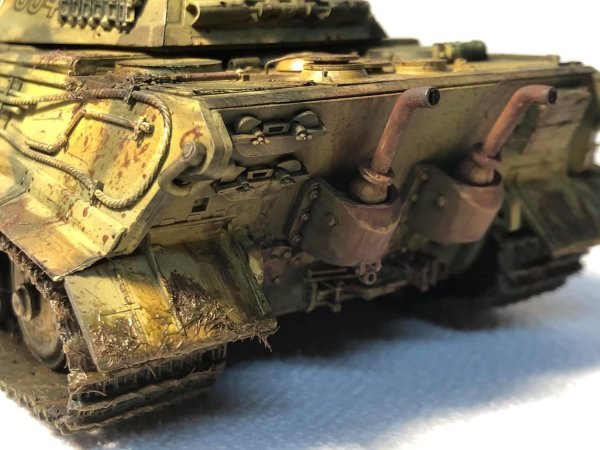
  1. Back at the King this morning. In step 2 I built up the drive sprocket and idler wheel, leaving the road wheels for now, instead I hopped over to step 3 attaching the transmission/drive sprockets, idler arms. After that it was on to step 4 assembling the aft exhaust bulkhead and attaching the mud guards.
  2. Oh thanks. I really enjoyed doing the ambush diorama. It was great fun and I used a bunch of new techniques.
  3. Definitely a possibility! Love the weathered and distressed look of this build.
  4. I really enjoyed building this ambush diorama which you can see on display in Cambridge Ontario at Forbes Hobbies.
  5. Camouflage netting installed on the gun barrel. Love the look.
  6. AK makes all sorts of color combinations however I thought these two would best suit armor builds. I’m anxious to try them!
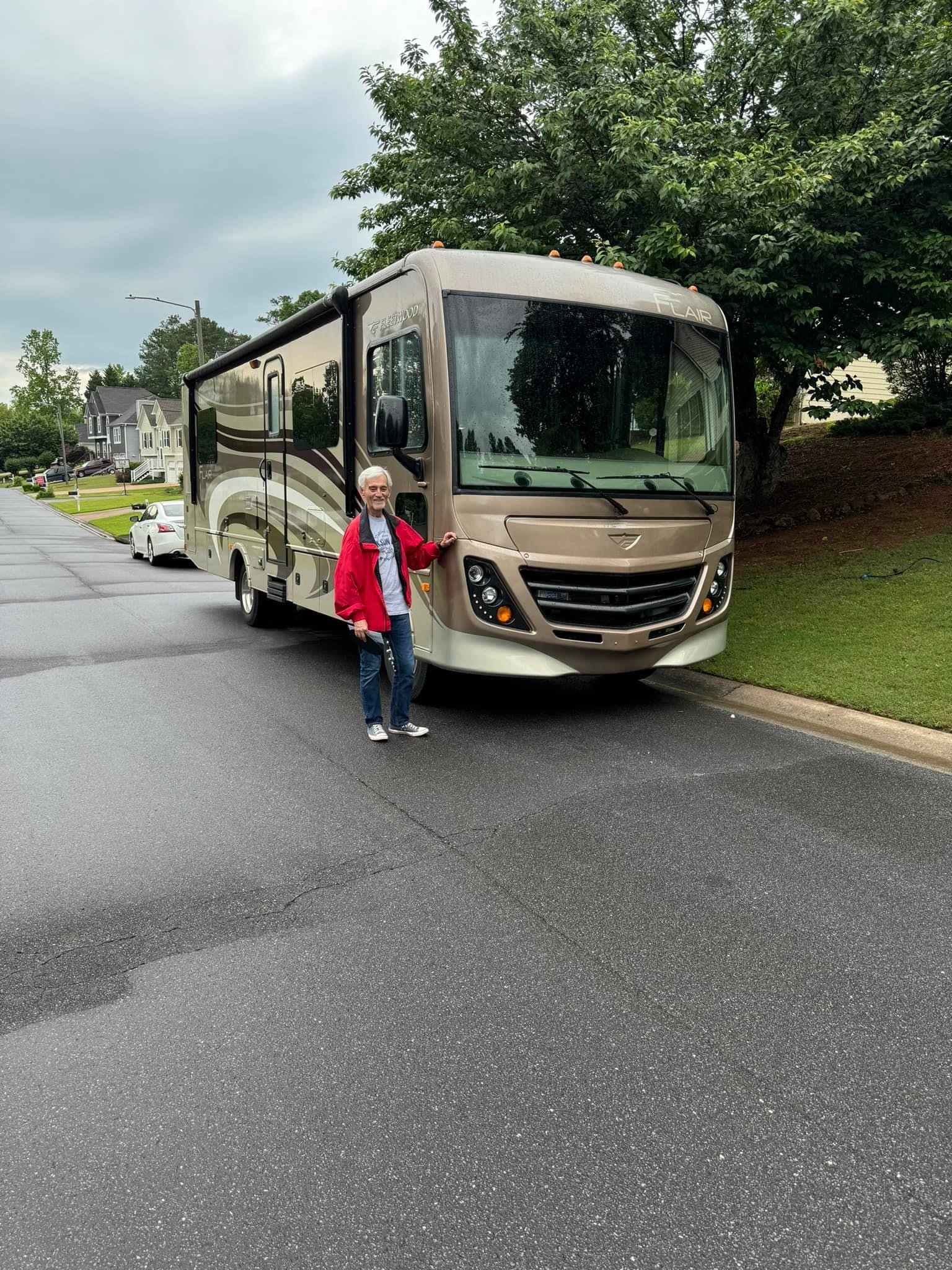
  7. How about this for a unique scheme? I’m kinda leaning to this as a scheme for my Me410B variant. A beautiful photograph of a captured Messerschmitt Me-410A-3 during a test flight under RAF evaluation. Note the RAF roundels painted over the original Luftwaffe markings. The Me-410 "Hornisse" (Hornet) was developed as a high-speed heavy fighter and bomber destroyer, designed to correct the disastrous flaws of its predecessor, the Me-210. The A-3 variant seen here was a long-range reconnaissance version, equipped with cameras in place of some armament, while still retaining impressive speed and defensive firepower. The Me-410 excelled in fast hit-and-run missions against unescorted bombers and in reconnaissance roles where its speed was a significant advantage. However, the arrival of long-range Allied escort fighters like the P-51 Mustang exposed the Me-410's poor maneuverability, leading to heavy losses in daylight combat. By late 1944, the Me-410 was withdrawn from bomber destroyer roles but continued to serve in limited numbers as a night fighter and reconnaissance platform until the war's end. Captured examples like this provided the RAF with valuable insights into German twin-engine fighter designs.
  8. I’m kinda leaning to this as a scheme for my Me410B variant. A beautiful photograph of a captured Messerschmitt Me-410A-3 during a test flight under RAF evaluation. Note the RAF roundels painted over the original Luftwaffe markings. The Me-410 "Hornisse" (Hornet) was developed as a high-speed heavy fighter and bomber destroyer, designed to correct the disastrous flaws of its predecessor, the Me-210. The A-3 variant seen here was a long-range reconnaissance version, equipped with cameras in place of some armament, while still retaining impressive speed and defensive firepower. The Me-410 excelled in fast hit-and-run missions against unescorted bombers and in reconnaissance roles where its speed was a significant advantage. However, the arrival of long-range Allied escort fighters like the P-51 Mustang exposed the Me-410's poor maneuverability, leading to heavy losses in daylight combat. By late 1944, the Me-410 was withdrawn from bomber destroyer roles but continued to serve in limited numbers as a night fighter and reconnaissance platform until the war's end. Captured examples like this provided the RAF with valuable insights into German twin-engine fighter designs.
  9. Mail call! The AK Wheel Markers arrived yesterday completing my set of markers. Very excited to try the out.
  10. Oh no we already had a Class A. We’ll stick with something more manageable, lol!!
  11. Oh thanks. We look forward to the adventures!
  12. Oh thanks. Trips are already being planned!
  13. Thanks we’re very excited.
  14. Look what came home with Carol and I today!!! It was my first time driving the Gemini and it was truly a wonderful comfortable non-stressful drive home!! Now I have to figure out how everything functions!
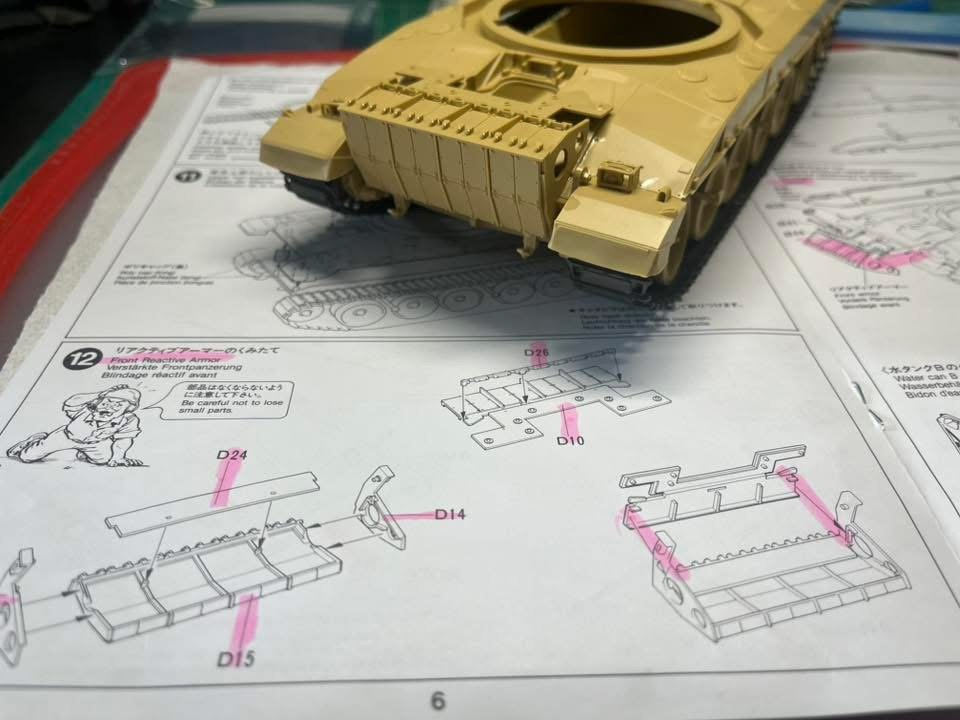
  15. Mail Call! Looking forward to building this 1/35 Trumpeter Paper Panzer for the second time!!
  16. Oh wow I’ll have to look into the Soviet kit. Thanks for the suggestion.
  17. Mail Call. Tamiya 1/35 Matilda Mk.III/IV is in the stash!! Although the blue is cool I really like the 49th Royal Tank Regiment, 35th Army Tank Brigade, England, 1942 color scheme!!
  18. Tamiya 1/48 A1H SkyRaider (Navy). I understand this is an amazing kit so I look forward to building it soon.
  19. I ordered a metal barrel, PE engine grille set, zimmerit decal set plus a tow cable set.
  20. LOL just barely!!
  21. Yeah it’s a pretty cool Paper Panzer.
  22. After suffering through the build of that awful Monogram Me410B kit it’s nice to return to the perfect engineering of a Tamiya kit. Finished step one assembling the suspension parts to the lower hull.
  23. Tamiya 1/35 King Tiger with Production Turret build thread (July 2025) After my Sherman E8 build follow along as I rebuild possibly my most favorite armor kit in an ambush scheme. In order to counter the increasing threat of Russian tanks during the latter part of the Second World War, Germany began development of a new heavy tank in February 1943. Officially designated the Panzerkampfwagen VI-B Tiger II, but better known as the King Tiger, it featured thick armor and a powerful main gun. Henschel and Porsche, who had prior experiences in the manufacturing of heavy tanks, came up with rival prototypes incorporating different turret configurations. After trials, the Henschel design was adopted for production. The King Tiger carried the Type 43 L71, 88mm high velocity main gun which was capable of penetrating 170mm thick armor plate at a distance of 1000 meters. Auxiliary armament included two 7.92mm machine guns mounted on the front hull section and on the turret. The extremely thick armor on the turret front measured 185mm and 88mm on the side panels. Power for this massive tank was supplied by a Maybach HL230 P30 V-12 cylinder, liquid cooled engine, producing 700 horsepower. The King Tiger went into mass production at the Henschel factory beginning August 1944, following the delivery of the last Tiger I tanks. Although the tank possessed advanced technology and sophistication, only 430 units incorporating the Henschel turret came off the factory line, and less than 500 total were ever available for combat.
×
×
  • Create New...