

JayDee
-
Posts
3,272 -
Joined
-
Last visited
Content Type
Profiles
Forums
Events
Gallery
Everything posted by JayDee
-
www.sealmodel.com This is Ericyy's new site. I know he's run out of stock at the moment, and due to the parcel weight, he advised I could add other items and not increase postage, so I asked for another 163 to add to the original one. Ericyy is a good guy and a little different to deal with, but he always does the deal!
-
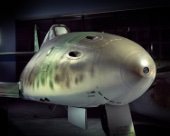
Placed an order for second Komet. £27 delivered, from HK! I think I'll build Eric Brown's Komet to sit alongside the wood and metal one...
-
Scale Model Challenge 2013 in Eindhoven/Netherlands
JayDee replied to JeroenPeters's topic in Modelling Discussion
Looks a great show, only balanced out with Laverty being there! Is that Dave Parker's 219? -
1:32 Messerschmitt Me 163B Meng Catalogue # QS-001 Available from Hannants for £44.99 Messerschmitt's Me 163 Komet was designed as a point-defence interceptor, designed to lay at rest in various locales around the Third Reich, and then to zip almost vertically towards bomber streams as they approached. The simply astounding rate of climb of this diminutive aircraft enabled the bomber streams to be almost overhead before the Komet had to actually take off. That same speed advantage became very much a disadvantage in combat, with the Me 163 frequently overflying its target before it had a chance to open up with its wing root mounted MK108 cannon. Designed by Alexander Lippisch, the tailless Komet was soon seen to be pretty ineffective as a fighter aircraft due to its limited flight time, relatively high speed, and resultant wide turning circles. The Komet first flew in 1941, although it didn't see operational status with the 'B' variant, until almost mid-1944. Powered by a Walther HWK 109-509 liquid-fuel rocket engine, which saw an injection of two fuels into its combustion chamber (T-Stoff and C-Stoff; Hydrogen Peroxide and methanol-hydrazine water mixture), the Komet took off conventionally before ejecting its dolly undercarriage and climbing almost vertically upwards. The aircraft would later return to earth as a glider, and land on a skid which would be deployed under the fuselage centerline. http://www.youtube.com/watch?feature=player_embedded&v=fuA2fKHStRw The Komet was a lethal weapon, literally. Most Komet losses were in take-off and landing accidents, with the Komet usually then exploding due to ruptured fuel tanks or the inadvertent mixing of the fuel vapours. It is true that the Komet was a menace for Allied streams, but perhaps more psychologically that due to actual kills. The Komet didn't actually destroy more than a dozen or aircraft, but despite this, further developments were planned and even tested, such as a Komet which could fire upward facing projectiles, triggered with a photocell which detected the bomber's shadow. Further prototypes were also built, with retractable undercarriage. In all, the Komet project was an expensive and dismal failure, and indicative of the wastage of men and materials which the Third Reich seemed to excel in the last 2 years of the war. Well, here it is! Meng's 1:32 Messerschmitt Me 163B Komet. We now finally have something to perhaps replace the now aged Hasegawa kit, which until now, had been the only injection moulded kit of this interceptor that had been available. The Hasegawa has long held out its position and with some work, builds up into a truly gorgeous model of this famous aircraft. But, as that kit needed a generous dollop of resin and PE, plus a total re-scribe in order to bring it up to standard, have Meng finally brought the Komet into the 21st Century? Well, we'll not take a look at this finally. Meng's Me 163B, their first release in 1:32, is packed in a sumptuous, satin-finished box, with a box art image showing the Komet diving away from a B-17 stream, post attack. On top of this, a white sleeve is slid onto the box, containing a cutout of the Komet which cleverly just displays the aircraft. For me, the box art is all part of the kit experience, with good box art certainly being an inspiration for the forthcoming build, and here, Meng excels. Inside the box, the Komet is broken down into SIX sprues, with five of these being in medium grey, one in black, and the last one in clear plastic. Even Zoukei-mura ditched the multi-colour styrene in favour of just grey. I hope Meng follow suit with their releases in future. All sprues are individually bagged, minimizing risk of scuffing or parts being broken from the sprues. Take these sprues out, and I swear you'll have difficulty fitting them back in. I suppose there's only one thing to do then.....build it!. Underneath those sprues, a single decal sheet is to be found in a clear wallet, and two PE frets. Oh, some vinyl tyres too, but we'll come to them later. SPRUE A Looking at the first sprue, you can see that Meng have also followed Hasegawa's lead by moulding the rear fuselage separately to the font, in order for the modeller to display the detailed Walther rocket engine. In fact, that's not the only interior detail present with this kit. Meng have also recreated the fuel tanks and weapons bays. That pretty much buries the old Hasegawa kit, without even looking further. The fuselage isn't just moulded with a separate rear section; the entire wing root it also separate, with the forward wing root being attached to the wing parts, and the rear root being an insert which is to be found on the next sprue. In fact, the whole forward wing root area is a gaping void, into which you fit the underneath fuselage skin, forming the root wall. Onto this of course, you will build the weapons bay. As this kit includes those internal T-Stoff and C-Stoff tanks, the upper forward fuselage is moulded separately, giving the modeller the option to pose this 'open'. The rudder is also moulded separately to the rear fuselage, allowing you freedom to pose this as you wish, as the rudder itself is hinged. As the rear section can be removed, Meng have moulded constructional detail within this area which you will see if you look into the rear shell. In order to fit the two fuselage sections together, a couple of wing root inserts are provided to act as plugs. When you display the parts separated, you just pull the plugs out again. A very nice touch! The nose cone, as with the Hasegawa kit, is also moulded as a separate part. The only similarity here with the Hasegawa kit is that Meng have chosen not to include the detail which would hide behind that cone. There are in fact two slightly different styles of electrical generator impellor on this sprue. You will also find the canopy framing (yes, no pesky masking to do!), wing slats, interior fuselage panels, whip aerial and keel. SPRUE B This sprue contains the 4 largest parts of the Komet, namely the upper and lower wing panels. Moulded in grey styrene, these incorporate the wing root fairing into which the upper panels have the gun bay access panels in an open attitude. Underneath the wings, the ejection chute openings are also open. There isn't much overall detail on the Komet wing, as these were mostly wooden, but the access posts are cleanly scribed, and the wing root fairings have excellent fastener detail. Meng have chosen to make the ailerons and elevons separate too (and moveable), as also with the large plate airbrakes which sit below the wing. These are supplies as photo etch parts. SPRUE C Essentially, this sprue carries a mish-mash of both interior and exterior parts, including rudder, ailerons and elevons, inner wing root fuselage walls (gun bay walls), external fuel tank covers, gun bay covers, and two different ammunition saddles, depending on whether your model will be fitted with MK108 or MG151/20 weapons. You will also find the ammunition belts here too, moulded separately from the saddle. SPRUE D Oddly enough, this sprue is moulded in black styrene. The remit of this sprue is clear. On here, you will find the extendable tail wheel parts, the retractable landing skid, and also the jettisonable dolly undercarriage. The Komet can be modelled with the skid in both a retracted or deployed state. The tailwheel assembly is also moulded here, and again you can choose from a retracted or deployed tailwheel, and options are included to build this with a fairing or without. Wheel hubs are moulded as an inner and outer plate, into which you'll insert a poly cap in order that the dolly axel can grip, whilst allowing free rotation. SPRUE E Another grey sprue, this time we have many internal parts here, including the superbly detailed cockpit. The cockpit parts here are the actual tub, with integral side console fuel tanks, rear bulkhead, detailed separate side walls, and two instrument panel options. These provide for a fully detailed panel, or a plainer panel onto which you'll assemble a number of photo etch panel parts. The cockpit detail is superb, although our reference material at Large Scale Modeller, does perhaps show that a little extra detail could be added within, such as pipework and push/pull handles and levers. The Eduard set might just have a few parts you can use to enhance this further. Displaying the Komet with the engine on show means you will need to find a way of supporting the parts, and Meng have included a stand to hold the rocket pipe up, and a cradle for the rear fuselage. Both MK108 and MG151 armament in included here, with slide moulding employed in order to make those gun muzzles hollow. The guns and muzzle aperture are very finely defined, and they look excellent. Meng have tackled the armoured windscreen by moulding the frame exterior separately to the actual glass panels. Nice touch. SPRUE F This sprue contains the very large T-Stoff tank which sits to the rear of the pilot. Meng have split this into an upper and lower half, with circular end caps. The Walter rocket engine parts are on this sprue also, and the detail here is superb, leaving the old Hasegawa kit very much in the shade. A good number of individual plumbing pipes are included, and these look a little fiddly to line up and pipe the engine, but I suppose the proof of the pudding will be on the eating. I'll be starting this kit shortly, and I'll find out. SPRUE G This is the clear sprue, and includes TEN parts. Meng have seen fit to also encapsulate the sprue in a slightly tacky film in order to protect it. I wish more manufacturers would do this. These include the canopy glazing, inner and outer armoured windscreen plates, quarter-light windows, and the small inner, rear cockpit windows. You'll also find the gun-sight and wing landing lights here too. The whole kit is superbly moulded, with next--to-zero flash, no visible sink marks and with minimal ejector pin marks. A few pin marks can be seen on some parts, but these areas generally aren't visible. PHOTO ETCH TWO PE frets are included with this release. Produced from bare brass, the largest fret contains the wing airbrake, seatbelt parts and fuel tank cover latches. The second fret is exclusively instrument panel sections, comprising the main panel, raised main panel and side panels. Etch quality is superb with excellent detail definition. WHEELS Unusually, Meng have chosen to include rubber/vinyl tyres on this release. Whilst some modellers like these, I don't. The seams can be awkward to remove, as can the sprue gate. Thankfully, seams aren't really too much of an issue here, but I would rather have seen the wheels supplied as plastic parts. The only real downside to this kit for me. Poly caps for the undercarriage are also moulded here. INSTRUCTIONS This kit contains a sumptuously produced, multi-lingual instruction manual, again adorned with that excellent box artwork. A history of the Komet is included within, followed by the kit construction, over 24 cleanly drawn stages. All illustrations are sharp, but take care in the engine stage as some pipework location looks a little ambiguous. Colour scheme illustrations are presented at the end of the manual. Colour call-outs are given throughout, with Vallejo codes being given. DECALS A single decal sheet is included for all THREE schemes available to you. Printed by Cartograf, the decals are thin, have minimal carrier film, and are in perfect register. Thankfully, the colours aren't too vivid also. As well as the various national markings, a full range of stencils are also supplied, as are instrument panel decals. Where markings run over a panel or joint, Meng have supplied these in sections. Swastikas are also included, but these are supplied in parts, so as not to offend any delicate political sensibilities. The three schemes offered are: Me 163B, 2./JG 400, Brandis, early 1945 Me 163B V-41, Major Wolfgang Späte, 13th May, 1944 Me 163B VF241, test flown by Eric Brown, 7th July, 1945 I think I might just build the British evaluation machine, as I once met the pilot who flew that aircraft, Eric 'Winkle' Brown. Me 163 Komet, from Large Scale Modeller 'Walkaround' Conclusion Well, we've certainly waited a few decades for another 1:32 Komet to be released in mainstream injection plastic form, but has it been worth it? A resounding 'YES'! The whole package is of the high quality we have now come to expect with Meng releases, and for their first foray into 1:32, this is an exceptional release, teeming with detail and buildability. It's great to see this aircraft finally released in a format for which you can really respect the architecture of the real thing. With the rear fuselage section removed, you can look into the fuselage of the Komet and see the engine, tanks etc. The detail is both refined and superbly executed, and the engineering is intuitive. Some clever engineering enables you to be able to pose the model split into two, without the need for ugly locating pips. All I can say is 'what a fabulous kit', and I really can't wait to start her. I see myself ordering one of these myself, to satisfy a cunning plan I have ;-) VERY highly recommended Our sincere thanks to Meng Model for the review sample used here. To purchase directly, click THIS link. James H
-
I just got this bad boy!
-
Zoukei-Mura 1:32 Zoukei-Mura He219 Brass Undercarriage
JayDee replied to rkranias's topic in Aircraft Reviews
Nice review Rick. I like how the nose gear is positionable too. Very useful -
Where do you go for your "different scales"?
JayDee replied to One-Oh-Four's topic in General Discussion
I'm building my 1:48 for Martin's blog. No need to be crestfallen with this most noble of web pages, with laughter and true friends. -
Heinkel He 111Ps of KG 27 (Kagero Red Series Decals)
JayDee replied to Mikester's topic in Tools, Books & Misc.
Such a great looking set. I can tell you that I'll be building a He 111P in the next months, with the HPH interior detail set. I might checkout this set for the build. -
Tommy's War 1914 Douglas bike 1/32
JayDee replied to JeroenPeters's topic in LSM 1/35 and Larger Work In Progress
Liking this lots. You setting this to a vignette with figures? -
I'm not using ANY colour scheme on mine. This will be a wood and metal finish machine, like the Natter.
-
My Meng sample is almost here....I'm like a bitch on heat!
-
Windsock Worldwide Vol.29, No.4 Albatros Productions Available from Albatros Productions for £7.60 For a modeller who is a relative newcomer to Great War aviation, there is much to learn. New techniques and perhaps a few new extra skills to help enhance the overall building experience. For both my type of modeller, and the seasoned WW1 modeller, there can be no better and inspirational publication then the Windsock Worldwide, which is squarely aimed at helping us to better understand the genre, to learn about the era, and to better our modeling skills. Today we look at the very latest issue. This very colourful edition, with a cover sporting a lozenge fabric design, and a seriously loud scheme for an American SE.5a, is emblazoned with the words 'WORLD WAR CENTENARY'. This July/August edition is released a the beginning of the 1 year run up to the 100yr anniversary of the advent of the Great War in 1914. It really is hard to believe, perhaps for a guy of my generation, that all the participants and protagonists are now long gone, with the memories of the hostilities now entirely faded out with respect to those who saw active service. It didn't seem long ago since I was a kid, and those same old soldiers were only perhaps the same age as my father is now. Truly sobering. With the Great War now being consigned to just another chapter in the history books, the rise of WW1 aircraft modeling is quite a phenomenon, helped not in part by companies such as Wingnut Wings and Roden. For a good number of years, Windsock Worldwide has been helping WW1 modellers learn their craft, and it continues today, complete with the far wider arsenal of kits and aftermarket items available to us. Opening with the usual Readers Gallery, we are treated to a selection of both static and flying model aircraft, from a 1:32 Junkers J.1, to flying models of a Martinside F.4 Buzzard, Bristol Boxkite and a BE2. For information junkies like myself, a round-up of the very latest titles pertaining to our genre is given in the 'Logbook Entries' section. Each of the 4 titles highlighted here is given a brief review, with purchasing information supplied. If you are a regular reader of this title, then Lance Krieg will be a name you are familiar with. His 'Modelling Masterclass' section covers a whole six-and-a-half pages of fantastic modeling tips and tutorials, all presented with excellent colour photography. This month, Lance looks at the various finishes that are common to this era. These are: Simulating Plywood Weathering Timbers Metals Camouflage: disruptive multi-tone, aluminium doped, speckled, streaked and French 4/5 colour A number of other paragraphs relating to finishes are also supplied, but non-scheme items. Lance's descriptions are concise and easy to read, and should at least give a reasonable grounding for you, and perhaps aid those questions you might have about how to finish a stick and string flying machine. This section is one of my favourites in Windsock Worldwide. This month's featured aircraft is the relatively unknown SE4a. Well, if there was an SE5a, surely there must've been a forerunner! The SE4a was actually quite an attractive single engine fighter that started off with a large streamlined spinner (a'la Bullet), and looked a little like a cross between the Bullet, Nieuport fighter series, a Camel and an SE5a. Difficult to explain but I'm sure the images here will let you see what I mean. The type abandoned the large spinner of the prototype in favour of a familiar open fronted, rounded cowl, as fitted to the Pup, Camel etc. A brief history of the type is given, as well as 3 pages of excellent line drawings. Following on from this, the subject of 'Great War Paint' is given over to the SE5a, inclusive of two pages of highly colourful profiles. If you thought every SE5a scheme was PC10, you're in for a shock to the system. As I previously mentioned, there is now an abundance of new items released for WW1 modellers, each and every month, and Ray Rimell does a round-up here, under the 'On The Transfer List' section. Here, reviews of the very latest products are published, such as decals from Lifelike Decals, Old Propeller, Pheon, and a special feature on Aviattic's lozenge decal sheets, including a step-by-step, photographic guide in how to get the best out of these very different decal sheets. If you're in the market for Aviattic sets, then Ray's write-up is unmissable. It's not all about decals. The very latest in kit releases is also examined, from the glorious, new 1:16 Sopwith Camel from Hasegawa to 1:48 kits from Roden, Eduard's new 1:72 skeletal Fokker Dr.1 triplane, and the most diminutive 1:144 releases from Brengun and Valom. All reviews are informative, and include sprue shots and purchasing detail. Aftermarket accessories aren't forgotten, as we look at the latest releases from Taurus and HGW. Next week, we will be publishing our review of the latest 1:32 figures from Wings Cockpit Figures. In this issue, Ray takes a look at these amazing, sculpted masterpieces. I warn you. Prepare for your wallet to take a hit. The figures are described in detail, as is the very latest release from Tommy's War. 'Rudder Post', aptly named, is the last section of Windsock Worldwide, and it deals with readers' letters, and responses from the editor. Conclusion Never a disappointment, this issue stays true to form with highly informative and innovative content, as well as that inclusion of historical content designed to expand our knowledge further. It's obvious that Ray Rimell puts a lot of effort into this publication, and for me, they are the one of the highlights of writing for SP&R. If you have ever thought about starting modeling in this genre, then you really cannot be without a copy of this being posted through your door. Very highly recommended Our sincere thanks to Albatros Publications for the review sample. To purchase directly, click HERE. James H
-
1:32 Lozenge decal sets for Fokker D.VII Old Propeller (Wood & Wire) Catalogue #: see article for # and price Available from Nordland Models It's true to say that Great War aviation modeling has taken off in a way that perhaps none of us would have expected, and that Wingnut Wings are primarily the driving force behind its popularity. Yes, there is Roden, and they have released some darn fine kits, but they were really recommended for modellers with some experience, whereas WNW kits have made the genre more mainstream due to their excellent engineering and tolerance. In the wake of this wave of popularity, we have welcomed many aftermarket companies into our little niche, namely Gaspatch Models, HGW, Aviattic and Old Propeller, to name but a few. It is the Old Propeller cookie-cut Fokker D.VII lozenge decals, designed for the Wingnut Wings kit, that we look at today. The sets we have been sent are: D32020W, 4 colour upper and lower wing lozenge, Fokker D.VII (Alb) (pink tapes), £12.63 D32021W, 4 colour fuselage lozenge for Fokker D.VII (Alb), including interior lozenge, £1035 D32022W, 5 colour upper and lower wing lozenge, Fokker D.VII (OAW) (blue tapes), £12.63 D32023W, 5 colour fuselage lozenge for Fokker D.VII (OAW), including interior lozenge, £10.35 D32024W, 4 colour upper and lower wing lozenge, Fokker D.VII (OAW) (blue tapes), £12.63 D32025W, 4 colour fuselage lozenge for Fokker D.VII (OAW), including interior lozenge, £10.35 D32042W, 4 colour upper and lower wing lozenge, Fokker D.VII (OAW) (lozenge tapes), £12.63 D32043W, 4 colour fuselage lozenge for Fokker D.VII (OAW), including interior lozenge, £10.35 D32039W, 4 colour upper and lower wing lozenge for Fokker D.VII (UDET), £12.63 All of these sets are 'base white', which essentially means that the decal sections are printed onto a large white inked background, presumably applied with silk screen printing due to the fact that most modern printing systems cannot produce white as a colour. The white layer itself, whilst discernible as a thickness, is still very thin, and pretty much in line with standard kit decal sheets we see today, from the likes of Cartograf etc. These base-white on these sheets, however, is printed in the Czech Republic by Propagteam, and the actual Fokker decal is laser-printed on top of this base colour. D32020, 4 colour upper and lower wing lozenge, Fokker D.VII (Alb) (pink tapes) D32021, 4 colour fuselage lozenge for Fokker D.VII (Alb), including interior lozenge Each set comes in a re-sealable clear wallet, with a product hanger at the top. Inside the packet, a stiff card insert helps to protect the decals from any bending, whilst there is also a rear, colour printed sheet which explains how to use the decals. This explanation isn't simply a case of teaching a modeller the blindingly obvious, but also acts as a guide as to which order to assemble the decal panels to your model, and also in preparing the decals themselves before use. The latter statement points at a stage in decaling that I've never before encountered, and this is in actually airbrushing the decals sheet before you remove the panels from it. I'm a little unsure as to why this process is needed, but clear gloss Gunze varnish, diluted with solvent in a 1:1 ratio is suggested. I'm thinking that this will help stabilize the laser inking over the top of the screen printed base, as no mention of doing this is apparent on the translucent decal sheets that we'll be reviewing shortly. D32022, 5 colour upper and lower wing lozenge, Fokker D.VII (OAW) (blue tapes) D32023, 5 colour fuselage lozenge for Fokker D.VII (OAW), including interior lozenge The appearance of the decals themselves is quite stylized, with an amazing looking fabric texture, including a degree of both fading and a depth (shadow) which can be seen at the wing rib tape juncture. When I say the decals are stylized, what I refer to is the actual texture itself, which may or may not be a little heavier than would be apparent at 1:32 scale, but again, this certainly doesn't detract from their amazingly attractive appearance. The fading of the fabric also adds an element to the decals that would normally only be achieved by adding a fading filter to standard lozenge sheets. Add to that the fabric texture, and you have a model which will already have that look you wanted to build, simply from decals. D32024, 4 colour upper and lower wing lozenge, Fokker D.VII (OAW) (blue tapes) D32025, 4 colour fuselage lozenge for Fokker D.VII (OAW), including interior lozenge These sheets, as mentioned, contain sections which much be cut around before you can apply them. This is because the carrier film is one continuous layer. The 'base-white' decals are discernible from the transparent sets by the fact that the sections are printed on that large white background, so obvious from the pale blue paper you can see at the perimeter. The paper used is classed as 'high quality English'. Whilst I have never personally used a set of these yet, I know someone who has, and he had no problem in applying them to his Albatros D.V. As he used the Old Propeller 'bolt sheets', covering the wing in panels, he had to apply a little shading to the wing rib tape to fabric junction, whereas these sets already create that image of depth for you without having to go to that trouble. For Albatros fans, I do believe that cookie-cut sets will be available for this, and other WNW kits in the near future. D32042, 4 colour upper and lower wing lozenge, Fokker D.VII (OAW) (lozenge tapes) D32043, 4 colour fuselage lozenge for Fokker D.VII (OAW), including interior lozenge Whilst not being as historically clued-up as I would like with regard to lozenge, these sets, as you can see, are described as OAW, or Alb, for example. Whilst this refers to the aircraft production facility, I'm unsure as to what the difference was in lozenge use between the different factories. Either way, you're sure to find exactly the set you need, whether it be 4 or 5 colour lozenge, and with the different pre-printed rib tape colour ensembles. What I do need to mention is that decals can be purchased with a transparent base, allowing the modeller to create his/her own shading and weathering. D32039, 4 colour upper and lower wing lozenge for Fokker D.VII (UDET) As is standard, your model must be painted in a light colour, preferably pale grey or white, and also gloss coated. Ensure your finish is as flaw-free as you can get it. You will notice that one set of these decals is a bit of an oddity. This is because it is a wing set only, designed for Ernst Udet's Fokker D.VII. The fuselage of this machine was painted red, so only the wing itself need be represented in lozenge form. This set also correctly describes the lower wing as Fokker-built origin, whilst the upper is OAW-built. I can't see any difference in the lozenge pattern on between these sets, nonetheless. The wing decal sets are printed onto a large, main A4 sheet with a smaller insert containing the upper wing upper and lower centre section decals. The fuselage sets are printed onto a single A4 sheet. Conclusion Old Propeller have taken the image of what most of us what expect to see with a fabric surface, and beautifully prepared something which looks both stylish and very convincing. The colours are slightly muted of course, as they have designed to look faded. Compare these with the Wingnut Wings decals, and the latter look highly radioactive in comparison. There's no doubt these are a massive improvement over what the kit itself offers, but of course, you will need to trim each decal from the sheet. As these are base white, you could possibly leave a fine edge to the trimmed parts, and slightly overlap the decals so as not to risk gaps in the finish. Just ensure that you don't leave any prominent ridges, but I don't think this would be possible with these releases. With the transparent versions, you would need to trim accurately, or you would be left with a dark line at the overlap. Highly recommended Our sincere thanks to Old Propeller for the review samples. To purchase directly, click THIS link. James H
-
Airbrushing Clinic, advice for my first efforts.....
JayDee replied to Matt_'s topic in Hints & Tips
I'm using Gunze and Mr levelling Thinner. If I use enamel, I work at roughly the same ratios. -
Airbrushing Clinic, advice for my first efforts.....
JayDee replied to Matt_'s topic in Hints & Tips
I'm using an HPC+, and I spray at around 15PSI. Paint thinned to about 1:10 thinners. Short blasts with the airbrush, moving the nozzle away from the model as you begin to release the trigger. Sorry, I'm crap at explanations. -
1/32nd scale Halifax: *project complete*
JayDee replied to ThomasProbert's topic in LSM 1/35 and Larger Work In Progress
ditto! -
Tommy's War 1914 Douglas bike 1/32
JayDee replied to JeroenPeters's topic in LSM 1/35 and Larger Work In Progress
Those spoked wheels look great. Are they flat plates, or slightly coned? -
HPH Models... Some interest items coming soon!
JayDee replied to Dave J's topic in Modelling Discussion
I was thinking more a study of construction, with cutaways of the main parts. -
1/32nd scale Halifax: *project complete*
JayDee replied to ThomasProbert's topic in LSM 1/35 and Larger Work In Progress
You shitting me? A 1:32 Halifax? FANTASTIC! I can't wait to see this build up. This is the sort of project which fires me up -
HPH Models... Some interest items coming soon!
JayDee replied to Dave J's topic in Modelling Discussion
I just HAVE to do the He 111 with this set.... Photos courtesy of LSP: And from HPH: -
Oh wow! That is spectacular! Got any more? ...and.....
-
Takom 1:16 Renault FT, Char Cannon/Girod Turret
JayDee replied to JayDee's topic in Armour/AFV Reviews
There you go: http://www.insidethearmour.com/ -
Now we can believe you Is there a forward bulkhead supplied? Lovely clean work so far. Looking forward to seeing this closed up.
-
1:16 Renault FT, Char Cannon/Girod Turret Takom Catalogue # 1001 Available from Hobby Link Japan for 13,500¥ Whilst the British has invented the so-called 'tank', it was the French who put it into a form that we would recognise as such today, and one which would inspire tank designers the world over. The Renault FT had a front situated driver, main armament in a rotating turret, and a rear-mounted engine, which is still an industry standard practice for tanks today. Introduced into service in 1917, production was slow, but increased rapidly through 1918, and by the Armistice, around 3000 had been built. Initially designed to incorporate a cast steel turret with a Hotchkiss 8mm MG, this was superseded by a Berliet-designed polygonal, plate turret, into which the Hotchkiss could be ditched in favour of the Puteaux 37mm gun. The Berliet was carried by a large number of the Renault FT before it was replaced in favour of the Girod turret, designed by Paul Girod, and mounted on a ball-race track. The rather narrow, and slow FT-17 was fitted with a long, curved tail which helped it negotiate trenches without it 'falling in' and becoming immobilised. Its tracks were held under constant tension, reducing the possibility of them being 'thrown'. This successful design was built under licence by the US, post-WW1, of which another 950 were built, and classified as the 'Six Ton Tank M1917', and the design went on to operate with many countries, globally. The type even saw active service in World War 2, even being operated by the Germans who had captured a number of these from the French. Unlike Meng who incorrectly called their release the 'FT-17', Takom have correctly designated their kit the 'Renault FT'. This tank was never referred to during the war as the FT-17. It's basically an anomaly. 'FT' itself was simply the next factory project code in line when the design was instigated. Source: Wikipedia Takom's new Renault FT kit is packaged into a large, glossy and very sturdy top opening box. Being a very new company, this is their first venture into this scale, and they sure have produced an extremely attractive package, with a great looking artwork on the lid, and the available schemes and sprue shots depicted on the box sides. Underneath that not insubstantial lid, THIRTEEN sprues are packaged into thick, heat-sealed bags. All are separately bagged apart from the sprues which are duplicates. In this case, these are packed two-per-bag. Takom have chosen an unusual route in their choice of plastic colour. Apart from the track link sprues (4 off), all the remaining sprues are moulded in a strange crimson red! I don't know their rationale, but this colour extends to the treatment the PE fret has had too. Very odd, but strangely easy to photograph for this article. SPRUE A (x2) This sprue, of which two are supplied, concerns itself with the Renault FT's forward idler and rear drive wheels, and the numerous smaller road wheels and track return wheels. The large wooden idlers are moulded in halves, with the drive wheel being a single part. The latter wheel has 3 raised ejection pin marks on one side. These minimal marks will be easy to erase. The individual wooden components of the idlers are separated by neatly engraved lines. The track return and road wheels are also moulded as two parts. Also on this sprue are the idler wheel forks and the springs which supported the upper return track roller beam, and various hull hinges, handles, brackets and chain attachment fittings. In this scale, the springs should have really been included 'as' springs, and not as moulded on detail. It would be better to remove this detail and wrap some thick copper wire around the posts. SPRUE B (x4) These are the track link sprues, and they are moulded in medium grey styrene. Each track link comprises THREE parts, and there are 32 tracks per side. You do get spares here, as each sprue contains 18 links, therefore you are supplied with 72 links, as opposed to the 64 you will actually use. The links themselves look very accurate in relation to the reference book I have here, with them being correct in their thickness and profile. The link consists of the main plate, with two brackets above; one moulded with a pin which allows the tracks to articulate after construction. The smallest of ejector pin marks are present on the interior of these, but again, should provide no concerns as the plastic is only minimally raised. You should tackle these however, as you will see this portion of the track when assembled. The outside edge of these sprues contain a number of spare rivet heads. These are here for a reason. The turret is moulded as halves, and the limitation of the moulding process means that the protruding rivets which would stick horizontally out from the part whilst on the mould, would cause a problem which would perhaps need expensive slide-moulding. Takom's solution is to slice these from this sprue, and affix them in the locations shown. Problem solved! SPRUE C & D These sprues are virtually identical except for the fact that the slabs-sided hull sides are of course 'handed', as are the drive wheel gearboxes. The hull sides are moulded full length and incorporate the idler wheel connection points. The exterior of the hull exhibits crisp plating detail and nicely shaped rivet heads, which look more than reasonable for a 1:16 kit. On the interior, the same detail exists, including stiffening plating and some engine bay and driver compartment detail, as well as a recess for the shell racks. Other external plating is to be found here, as well as the engine bay doors, again, with superb hinge and raised rivet detail. Here you will find the road wheel support beams which are moulded as halves, and the leaf spring suspension parts which sit within. The framework for the curved beam tail gate is also moulded here, as are track return roller beam too. Some pin marks exist again on the interior surface plates, so get ready with the tickling stick and remove them. SPRUE E The hull floor and driver/gunner interior floors are moulded here, as two separate parts. Exterior detail for the hull floor is the same standard as the rest of the hull, with excellent rivet, panel, access port and hinge detail. The interior floor has sharp tread pattern. The upper hull with turret cut-out is found here, again displaying sharp rivet, access port and bracket detail. The ball-race turret track is moulded separately, and mine seems a little warped. It should conform when glues to the upper hull though. Ejector pin marks tend to strike again, and this time on the upper, inner side of the curved tail beam panel. Again, these are slightly raised, meaning that you only need to remove material, and not actually do any filling. Also on this sprue you will find the FT's fuel tank, single piece radiator/grille, two-part exhaust body, external stowage, beam and internal frameworks. SPRUE F This is the engine-room of the kit, quite literally. Most engine components are found on this sprue. The only real aspect I don't like about the engine's valve lifters and springs. These are moulded in situ, and would have been far better as separate rods with springs. It won't be too easy to do this for the average modeller, but luckily, the position of the engine and its narrow compartment mean that you won't be able to get a straight view of this anyway. The engine fan-belt is another case in point, as it is pre-moulded to the fly wheels. In this scale, this would have been nice to have been a separate part which slipped into the 'v' slots in the wheels, instead of looking homogenous. The interior exhaust manifold is moulded as a single part, which for such a piece, is easier to remove the seams. A good number of parts on this sprue are either engine-related, or ancillary equipment, such as fuel priming pump (as you see in aircraft cockpits), driver instruments, external tools (pick and shovel), and drive shaft axle, to name but a few on this busy sprue. SPRUE G G stands for 'Girod'. Well, it doesn't actually, but that's what you'll find on there; the Girod turret. The turret itself is moulded as halves, and the lack of slide-moulding means that some rivet detail looks a little distorted, but thankfully, you have those spare rivets on the track sprues to correct this, so again, this is no deal breaker. The turret body was a cast item, and this finish is what's missing from these parts. My usual trick is to lather Tamiya Extra Thin Cement over the surface, one area at a time, and stipple it with a rigid nylon brush. This is then finally gently rubbed over with medium and fine sanding sponges. You may have other methods to achieve this, as armour modellers. I use this technique on 1:32 WW1 aircraft exhausts. The turret also has the 'P GIROD' name cast onto it, as well as the casting foundry name, 'UGINE'. Internally, you'll need to remove a few ejector pin marks, and then insert the ammunition racks. Their location is marked with two horizontal lines. The turret lid is joined along the welding seam. My book doesn't show this as a thick weld seam, but there is, of course, a little roughness. Again, this isn't represented on the kit, so a little work will be required there. You'll also need to replicate that cast effect on the small cupola which sits atop the turret. The cupola also has internal detail. The turret ammunition racks are moulded here, but strangely enough, the kit doesn't contain any ammunition whatsoever. To the rear of the turret, two doors allow some contact with the outside world. These are neatly moulded with vision slits. Internally, each door has a long ejection pin tower which you'll need to snip off and clean the door surface. SPRUE H (x2) These two sprues concern themselves with the FT's armament. There are actually a number of duplicate parts here that you won't use. It was obviously cheaper to produce two identical sprues with these parts, than to tool a new sprue. Here you will find the parts for the 37mm Puteaux gun, 3 part mantlet, and the inner hull ammunition storage racks. As a thought, it would be good to display the spare parts for the second gun, complete with mantlet, next to the completed model. Overall Assessment As I've already mentioned, there are some areas where ejector pin marks need to be eliminated, but overall, the quality of mouldings is excellent. I've only found one instance of sink marks, and those are on the end of the small engine mounted oil tank ends. You could fix that or it could simply be left as slightly beaten in appearance. Some parts are very close to the sprue, with only a minimal gate, and it is advisable to use a razor saw to remove those parts. Flash is present, but not very common, and some parts on my sample exhibit some black/brown gunge which may be left over from the moulds. Cleaning the sprues with a mild detergent will eradicate this. PHOTO ETCH The colour of this single fret matches that of the plastic. Looking at it, I don't think it's anodised, which would just chemically affect the metal surface, but it looks like an actual coating. As the edges are also coated, I don't think it's printed either. I would suspect that this has been dipped/sprayed in paint, and as a result, you are best advised to try to scrape the adjoining surfaces when using the parts. The etch itself is superbly made, and contains SIXTEEN parts. These are for the drivers back rest strap, driver pedal anti-slip plates, engine bay hull steps, road wheel beam plating, and internal chain drive cover. CHAIN A length of superbly made, and blackened chain is included. This is to be wrapped between the lugs on the rear hull and the curved tail beam. A nice touch, and thankfully not in plastic, so it should hang quite realistically too. DECALS A small sheet is included for the THREE schemes which are supplied with this release. The FT didn't carry too many markings; a few emblems, serials and a little in the way of a personal slogan for one machine. The decals are thinly printed with minimal carrier film, and are in perfect register. The whites are also non-vivid too. The schemes supplied are: 2nd Section, 1st Company, 505E RAS, France, 1918 Co.C, 327th Tank Battalion, 1st US TankBde, St. Mihile, September 1918 'Passe Par Tout', 1st Co, 2nd Section, 2nd Battalion, 1st Polish Tank Regiment, 1920 INSTRUCTIONS These are printed as a 14 page A4 landscape booklet, with glossy blue cover. The model is completed over 38 stages, and construction is shown as line drawings. There is a little ambiguity in areas, but looking at subsequent stages will clarify any mental anomalies you may encounter. Colour call-outs are given throughout in Tamiya reference codes. Conclusion I have noted a few issues with this kit, but on the whole, it's a great package for Takom's first ever release, and if this kit is anything to go by, their subsequent releases should just get better and better as they learn and listen to customers. Producing a 1:16 WW1 tank as that initial release is of course taking a few chances perhaps, but with Great War modelling now coming into its own, and companies such as Meng now taking a slice of the pie, it makes sense to release this kit in the larger scale. The opportunities for super detailing are immense here, and even out of box, the Takom Renault FT will look mighty impressive. The finished kit will have a length of around 12 inches (30cm), so still isn't too big to display in your cabinet, yet is of such a scale that it will look mildly imposing next to your tiddly Tigers and Panthers. Oh YES! VERY highly recommended James H Our sincere thanks to Takom for the review sample used here. To purchase directly, click THIS link.
-
No reason this couldn't be done in Jap colours for a Pacific War build. The Typ 79 Ko-Gata http://forum.axishistory.com/viewtopic.php?f=65&t=162780