All Activity
- Today
-
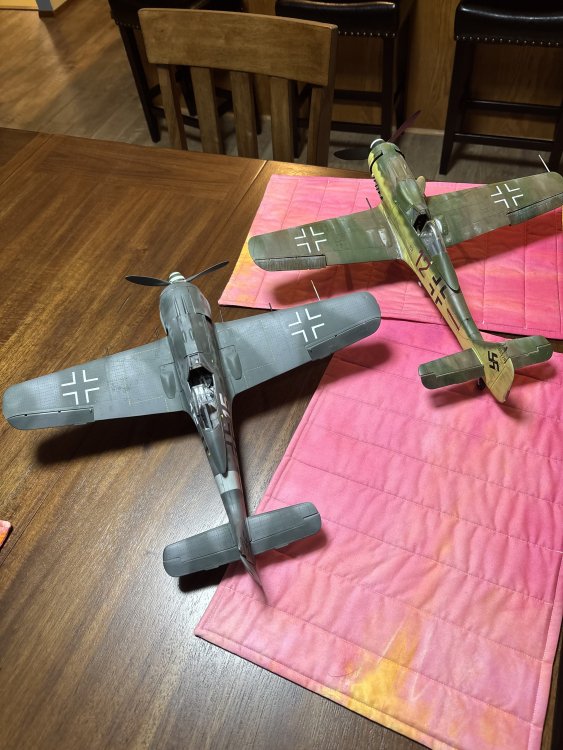
Kotare Bf 109K-4 with AIMS decals
BlrwestSiR replied to denders's topic in LSM 1/35 and Larger Work In Progress
I'm with Martin, some very nice progress on the paint. -
After many years I re read James Clavells Shogun, and it was just as good as it was when I first read it. Unfortunately it makes picking my next read difficult, so I will take the easy way out and probably go for Tai Pan. Cheers Dennis
-
1/32 ME-262A-2a/U2
JeroenPeters replied to JeroenPeters's topic in LSM 1/35 and Larger Work In Progress
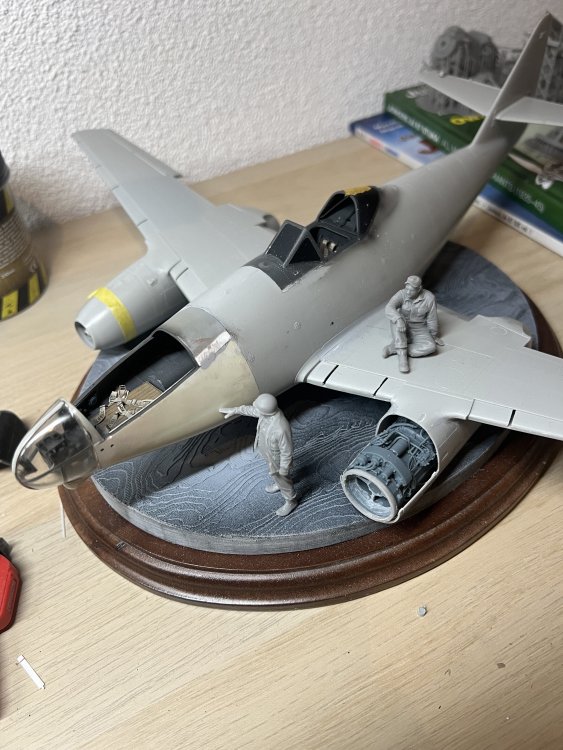
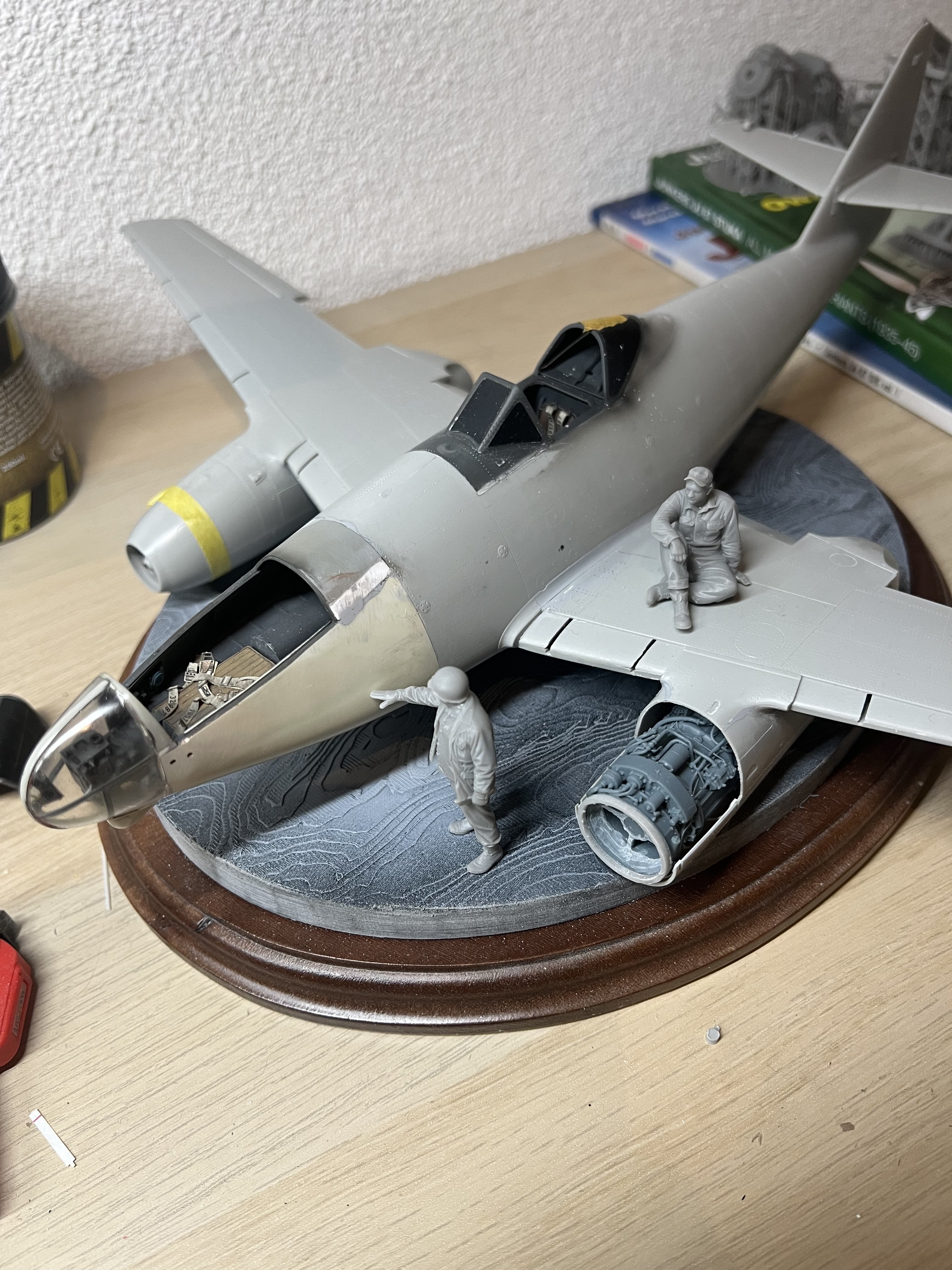
Drew the bracket and started adding the wiring and bomb release 'remote'. Already printed the Lofte bombsight a few times, but I'm siure the new printer gives better detail. -
You picked a fine kit to return with. Welcome back.
-
Kotare Bf 109K-4 with AIMS decals
Martinnfb replied to denders's topic in LSM 1/35 and Larger Work In Progress
Nice progress. -
-
Kotare Bf 109K-4 with AIMS decals
denders replied to denders's topic in LSM 1/35 and Larger Work In Progress
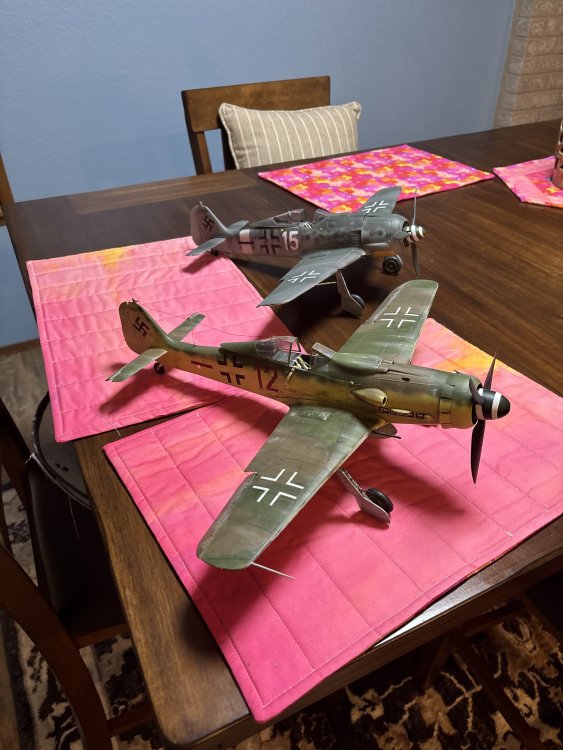
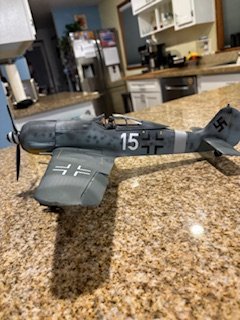
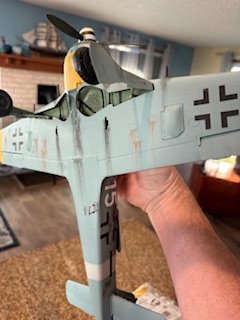
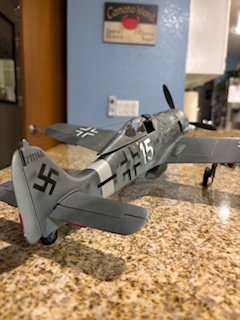
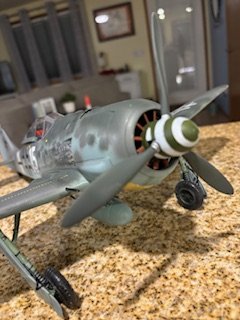
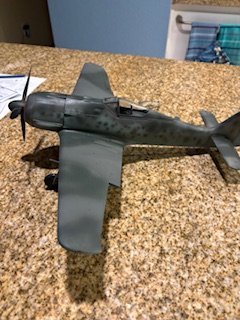
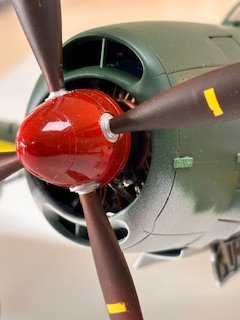
Green spots on the rudder and the paint over of a previous number on the fuselage with RLM 71 Dunkelgrun. -
Martinnfb started following ICM 1:48 B-26C-45 Marauder
-
Thank you for the review James, this is definitely a gem of a kit. A must have I would say. Might join the Marauder party as well. Cheers Martin
- Yesterday
-
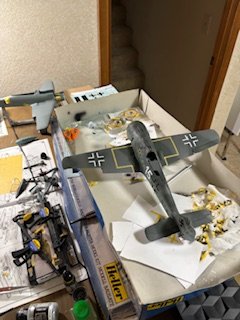
What is on your bench right now ? Share a picture :)
BlrwestSiR replied to Martinnfb's topic in Modelling Discussion
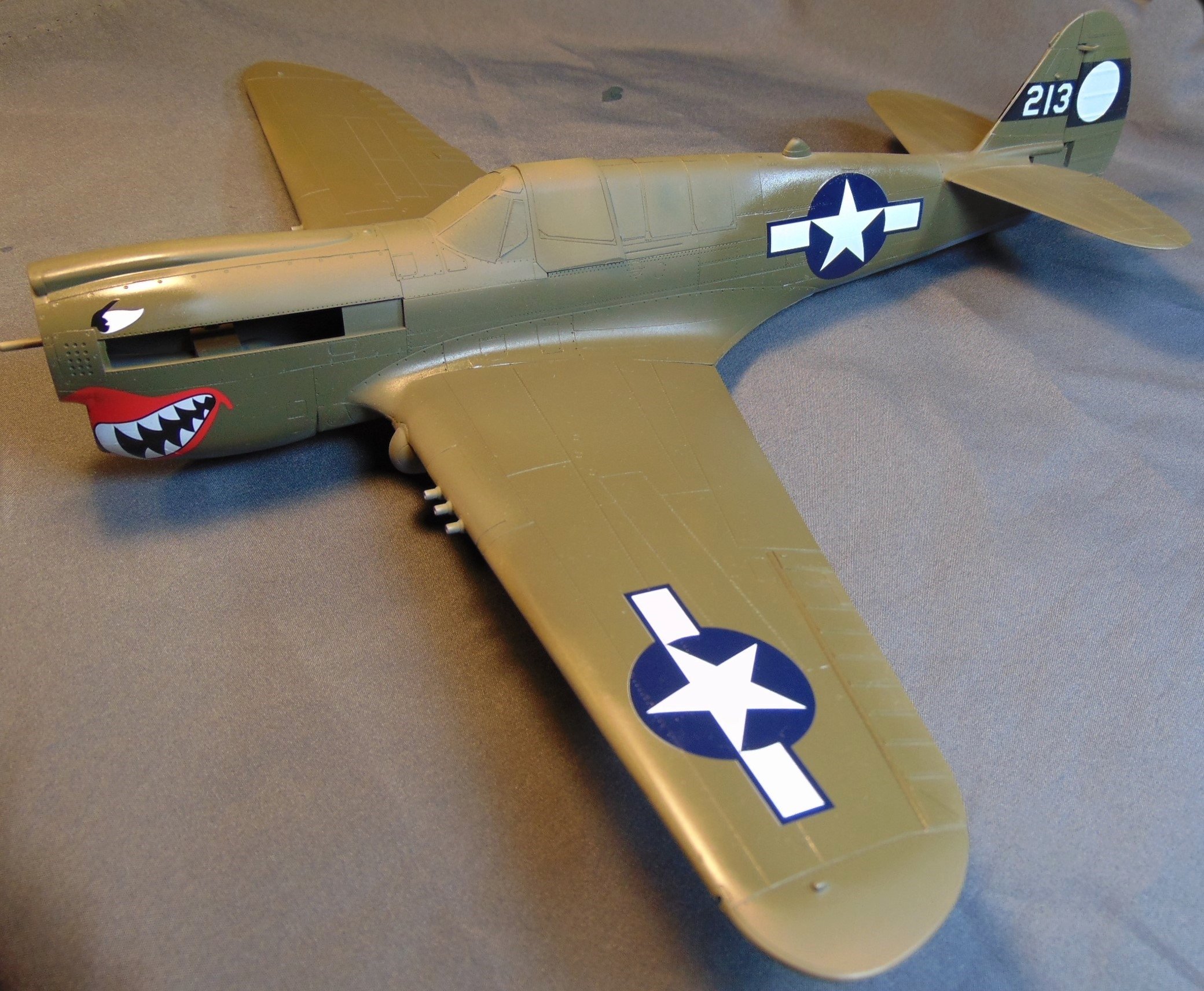
Gus, this one is an original boxing of the kit so it's from the '80s. It's actually the very first 1/32 aircraft kit done by Tamiya. They've come a long way since then that's for sure. -
Kotare Bf 109K-4 with AIMS decals
denders replied to denders's topic in LSM 1/35 and Larger Work In Progress
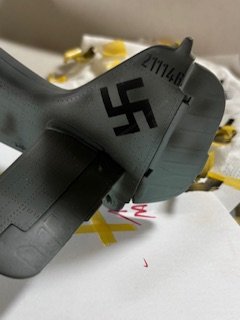
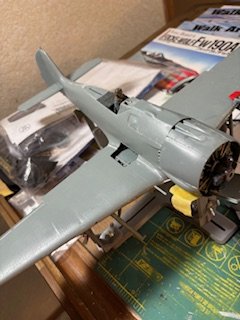
Masked for RLM 75 Grauviolett. Unmasked. Masked for the RLM 81 braunviolett rudder, then unmasked. Next is masking for the RLM 71 Dunkelgrun spots. I've scanned profiles and created masks for various colors. The green spots will be masked too. I'm not sure about the Werk no., it's not fully readable on John's profile and I don't think I have any resources for having the correct Werk no. What I have is 3351xx. -
What is on your bench right now ? Share a picture :)
GusMac replied to Martinnfb's topic in Modelling Discussion
Unusual to get a Tamiya kit that's warped. Their QC is usually pretty good. -
1:48 Hs 123A-1 ICM Catalogue # 32016 Available from Jadlam for £47.49 The Henschel Hs 123A-1 was a German single-seat biplane dive bomber and ground-attack aircraft developed in the early 1930s, during a period when the Luftwaffe was still in its formative stages. Designed by Henschel Flugzeug-Werke, the Hs 123 first flew in April 1935 and was initially intended to serve as a modern dive bomber for Germany’s rapidly expanding air force. At the time, biplane designs were becoming outdated, but the Hs 123 stood out for its strong construction, excellent manoeuvrability, and reliability. The A-1 variant was the first production model and entered service in 1936, helping to establish Germany’s early close air support and tactical bombing capabilities. The Hs 123A-1 saw its first combat use during the Spanish Civil War (1936–1939), where it was flown by the German Condor Legion in support of Nationalist forces. In this conflict, the aircraft proved highly effective in ground-attack missions, using bombs and machine guns to strike enemy troops, vehicles, and fortifications. Pilots praised its ruggedness and ability to operate from rough airfields close to the front lines. The aircraft’s radial engine produced a distinctive sound in dives that was designed to intimidate enemy troops, adding to its psychological impact. Experiences in Spain demonstrated that, despite its outdated appearance, the Hs 123A-1 was well suited to low-altitude battlefield support. During the early years of World War II, the Hs 123A-1 continued to serve with the Luftwaffe in campaigns in Poland, France, and on the Eastern Front. Although more modern monoplanes were becoming standard, the Hs 123 remained in use because of its durability and effectiveness in harsh conditions. It was especially valued in the Soviet Union, where it could operate from primitive airstrips and withstand heavy ground fire. By 1942, most Hs 123 aircraft had been replaced by newer designs such as the Junkers Ju 87, but some remained in frontline service until 1944. The Hs 123A-1 is remembered as one of the last successful combat biplanes and as an important contributor to early German close air support doctrine. The kit This kit is ICM's fourth incarnation of the Henschel Hs 123 kit, since its inception in 2024. For me, this probably has the most bizarre but extremely attractive scheme that ever adorned this type. The kit itself is packaged into one of ICM's very sturdy top flap opening boxes, with a separate glossy lid depicting that particular machine that I mentioned. Inside, there are EIGHT sprues in grey styrene, and one in clear. There is also a 16 page, full colour instruction booklet, and TWO decal sheets. Ok, let's take a peek... Not too many parts on this sprue, but we do start with a view of the fuselage halves. The kit is moulded in ICM's usual mid/light grey styrene which melts beautifully with a decent cement like Tamiya's hot stuff. The fuselage is typical of ICM in that there's no rivet detail, but the panel lines are nicely represented with some finesse. If you want rivets, then it's time to put Rosie to use. You could, I suppose open the louvres up a little, but I'm not convinced that it would be necessary as the gap would be tiny. Some wash in there would probably have the same effect. Internally, the fuse has some moulded detail onto which to add further detail. One particular machine will need hole(s) drilling out, clearly shown in the manual. Also supplied here is the forward upper fuse with integral MG channels, and a two-part drop tank that will be slung underneath he fuse centreline. Three parts comprise the lower wing, with the underside being full span (yet relatively small in 1:32). Again, no rivet detail, but pretty much everything else. The landing flaps are moulded in a closed position. The lower wing doesn't have ailerons, so no need for such details. The strut sockets are reasonably deep too, meaning fitting and mounting the upper wing should be quite easy. All parts here are used except for two upper wing inserts which would be used to hang the ailerons. There is a set to use here, so not quite sure what the difference is except for a possibly different aileron style. Here you will fine the aileron, elevator and rudder halves. all with excellent fabric and rib details...not too harsh to my eye. There are TWO of these sprues, duplicating all of the parts of which there are two or more. Here you will find undercarriage struts, spats, ordnance (plus percussion bombs), wheels, bomb racks, fuselage MGs, etc. Everything on this sprue is to be used with this release. This is where you'll find many of the cockpit details, as well as two-part intake unit, cabana struts, tailplane support struts (moulded as a single part), engine exhaust array, and things such as control surface push/pull rods. Now we can see the various parts which construct the BMW 132D radial engine, These are moulded in beautiful detail, and with some quite fragile parts that could use some decent quality nippers to remove from the sprue. You will also see the multipart engine cowl with its familiar blisters, wing struts, tailplane halves, two-blade prop, cockpit bulkheads, seat, and instrument panel etc. The entire upper wing is moulded in two full-span parts, minus the ailerons. The detail nicely represents the fabric covered original with its dope-shrunk scalloped surface. There is only one clear sprue, and it's tiny. This comprises the windscreen and wingtip lights. You can't see in this photo, but the clarity of the parts is every bit as good as other contemporary manufacturers. Decals The are TWO decal sheets in this release, catering to THREE different schemes. One sheet carries decals for just one single machine, meaning all those whacky white lines and graffiti don't have to be done by hand or masked. All decals are thinly printed and in perfect register, with minimal carrier film. Colour is solid, which is just as well with all the white coloured decals to add to a Spanish splinter style scheme. The three schemes supplied are: Hs 123A, pre-production aircraft, 1936 Hs 123A-1, 3./St.G. 165 "Immelmann", 1937 Hs 123A-1, 3./Fliegergruppe 50, Lieutenant Siegfried Hamann, Langensalza airfield, Summer 1938 Instructions A full colour, 16-page manual is included, complete with parts maps and multiple elevations for each scheme. Construction is shown in clear line drawing format, with good paint notation given for ICM's own paint range. Conclusion ICM did a great job of recreating this aircraft in 1:32 and really has done it some justice. Moulding is excellent with zero flash and ejector pin marks aren't of any issue here. So much detail is to be had, and for those wanting more than regular Luftwaffe splinter camo, this has it all...from a simple looking machine to possibly the most incredibly unique machine of them all; that of Lieutenant Siegfried Hamann. Go ahead and treat yourself! My sincere thanks to ICM for sending this kit out for review on Large Scale Modeller. To buy direct, click the link at the to pop the article.
-
Yup, that's why I said it. In fact, I've been out of the hobby for 6yrs now. Much has changed.
-
1/32 ME-262A-2a/U2
Martinnfb replied to JeroenPeters's topic in LSM 1/35 and Larger Work In Progress
NICE! -
1/32 ME-262A-2a/U2
JeroenPeters replied to JeroenPeters's topic in LSM 1/35 and Larger Work In Progress
Reprinting the canopy tomorrow, together with a positive vacform shape to fashion the glass. The canopy needed to be 1mm longer. Adding tubular framing to the inside of the canopy hood and need to add the lock and handhold. Also having to 3d model the gunsight bracket. Seriously every single MDC part is bend, foggy, shrunken, etc. -
More than a little, I would say... They have boxed it three times already.
-
Glad you're back at the bench, even if it's for short spurts. Looking good there Martin. The upper wings mods have come out really well.
-
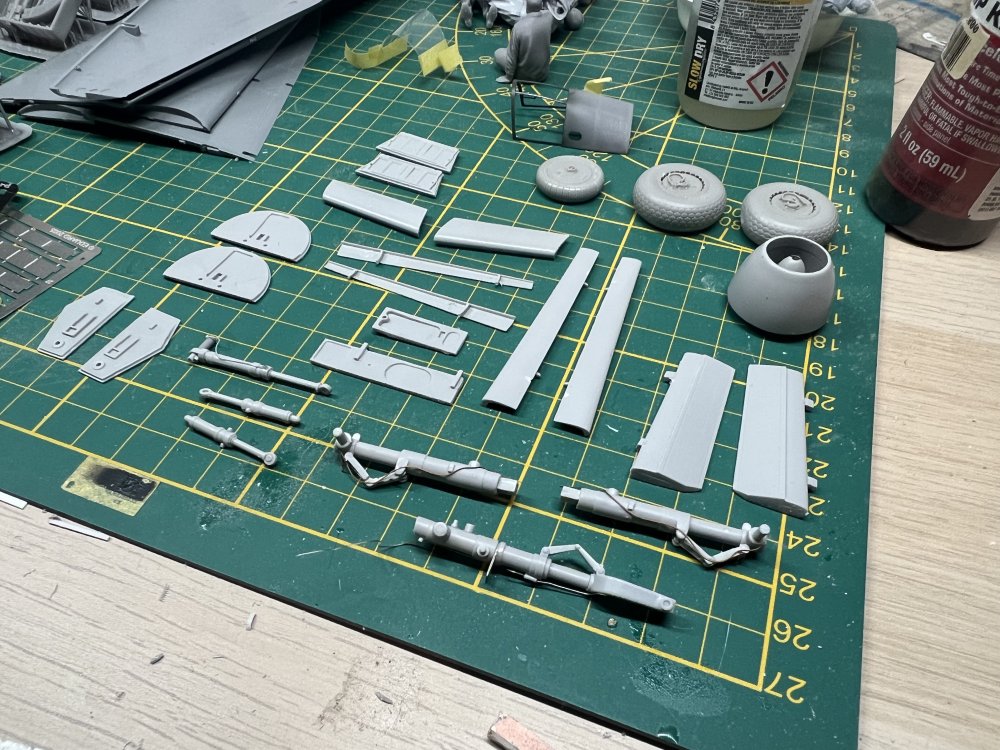
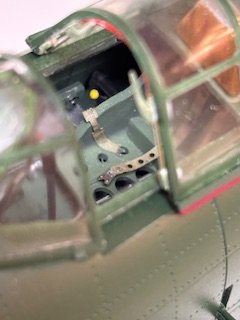
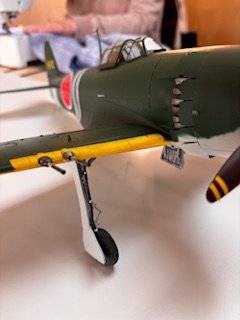
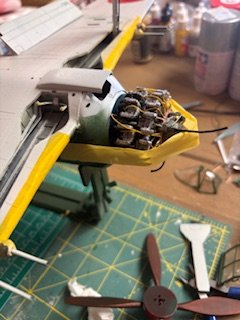
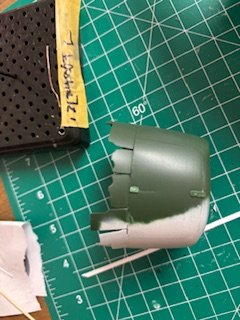
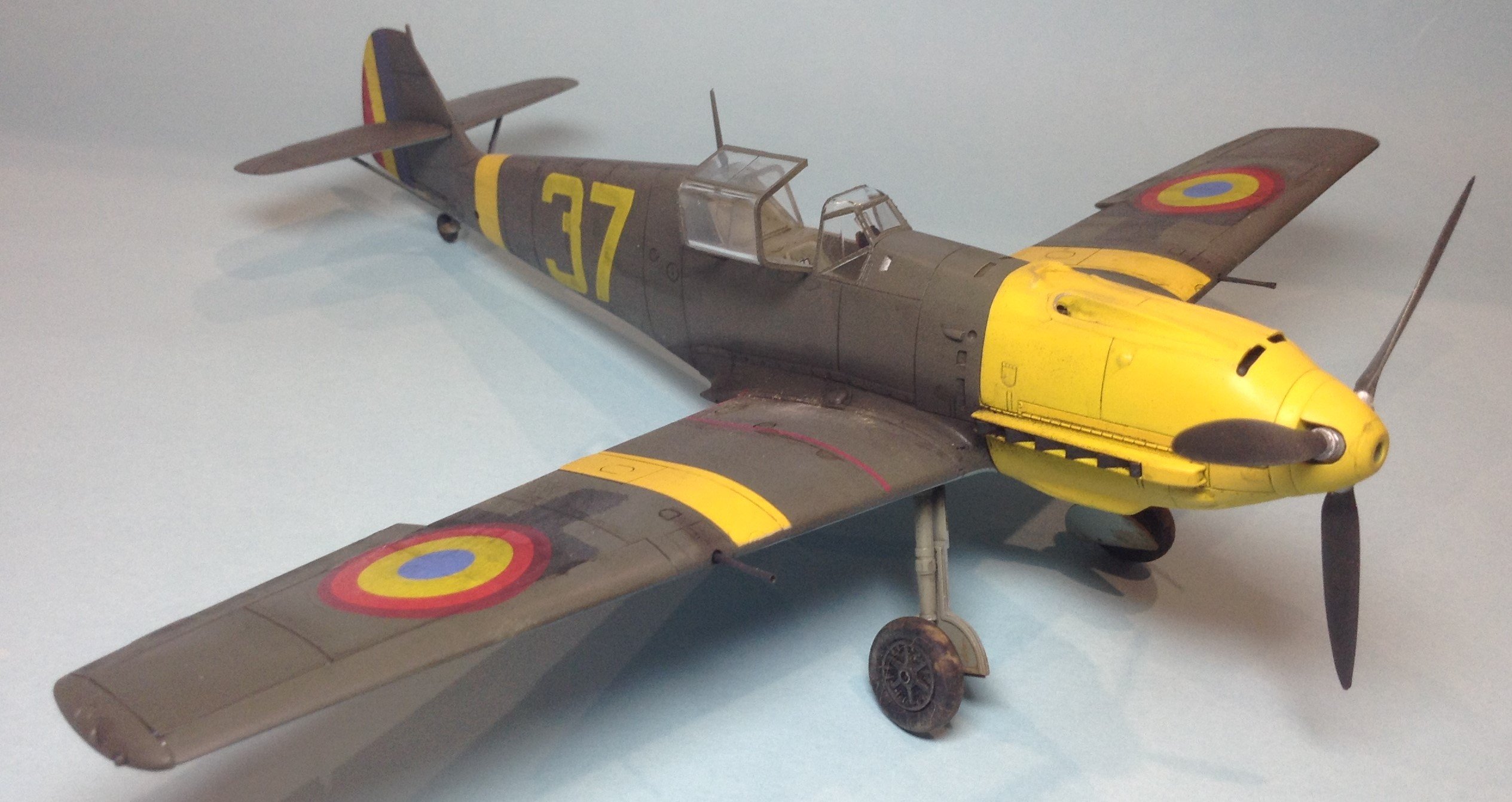
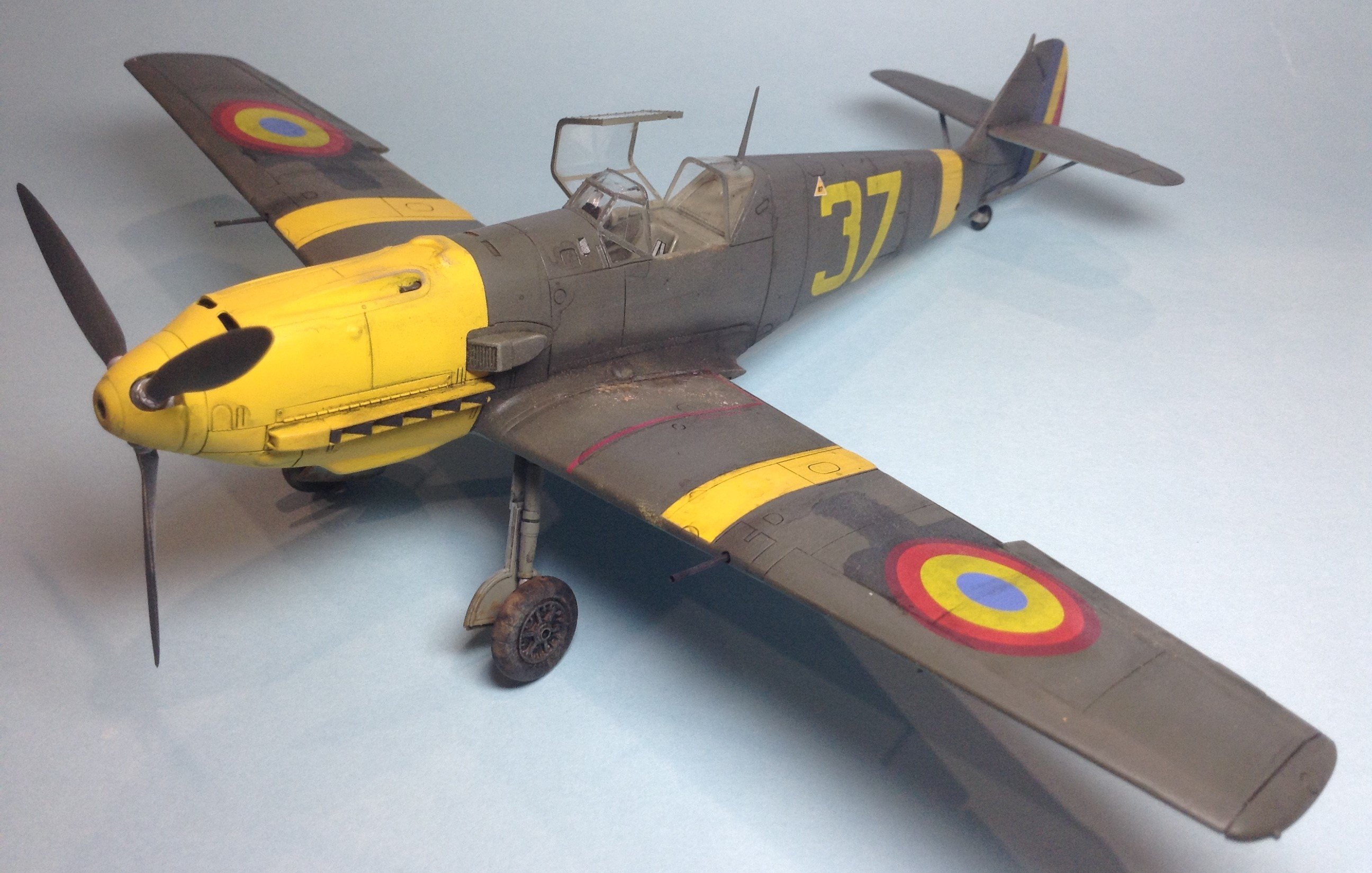
The progress is slow, I can work behind my bench only for short period of time. Usually ten minutes at the time. The main wing is almost ready. I finalized the shape of the wing bulges and created space for the ejection port shoot that is somewhat compromising the integrity of the gear leg assembly. I’ve also been working on the shape of the power egg , however the progress is much slower there, since everything has to be recreated from nothing. The original parts serve as a locators for positioning if the exhaust , gun ports etc. I know, one would say that there’s not much difference between the G and K models , but in reality everything has to be altered , scratched build or modified in one way or the other
-
It IS a subject that interests me, but paying a lot of money up front for something at least 2yrs away....nope. It's actually a Mk.V I would love to have but I still don't think I'd be paying for what is a kickstarter.
-
I’ve decided I need to let go of a few of my higher end kits I just keep looking at and not building. I can use the money for other things. No need to keep collecting hobby stuff I’ll never get around to. Yea, maybe it’s a bit high. But prices are all over the place and I’ve tried to price at an average. I’m going to give it a few days here before it’s off to eBay. Of course I’ll set a high reserve there as well. But NIB, in great shape and kept in a climate controlled house ever since I’ve owned it. Opened it up this morning to verify nothing is warped over time. All looks great! I can post up pics later. Paypal or a USPS MO (Only USPS) please. Shoot me a PM if interested.
-
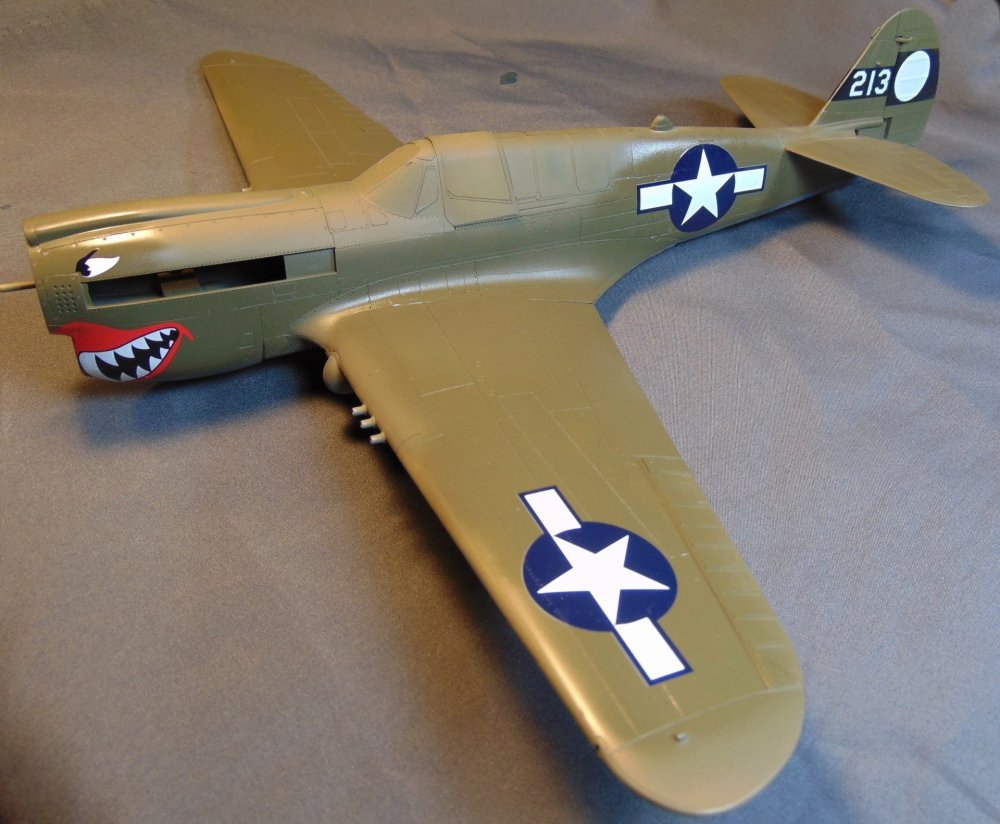
Thanks Kevin. Actually the decals are from my stash. 🙂 I didn't want to use the old ones as they don't look very "useable".
-
James H started following ICM 1:48 B-26C-45 Marauder
-
1:48 B-26C-45 Marauder ICM Catalogue # 48328 Available from Scale Model Shop for £67.49 The Martin B-26 Marauder was an American twin-engine medium bomber developed in the late 1930s and early 1940s for the U.S. Army Air Corps. First flying in 1940, it was designed for high speed and efficiency, featuring a sleek, narrow wing and powerful engines. These features made it one of the fastest bombers of its time, but they also resulted in demanding flight characteristics, especially during take-off and landing. Early in its service, a high accident rate earned it the nickname “Widowmaker,” raising concerns among pilots and commanders. As World War II progressed, improvements in pilot training and aircraft design greatly reduced accidents. The B-26 was deployed widely in Europe, North Africa, and the Pacific, with its most significant impact in the European Theatre. There, it was used primarily by the Ninth Air Force for medium-altitude bombing missions against German transportation networks, airfields, and military installations. Its speed, durability, and ability to carry a substantial bomb load made it an effective tactical bomber once crews mastered its handling. By the later years of the war, the B-26 had earned a strong reputation for reliability and survivability. It achieved one of the lowest loss rates of any American bomber in combat, thanks to its rugged construction and disciplined operational use. After World War II, the Marauder was quickly retired from frontline service as newer aircraft became available. Nevertheless, it remains remembered as a plane that overcame early difficulties to become one of the most successful medium bombers of the war. The kit This is around the 9th or 10th incarnation of the ICM B-26 Marauder kit since its initial release in 2024…and remember we are only just into February of 2026. This time we see the B-26C-45 (Block 45) The B-26C-45 Marauder was a specific production block of the Martin B-26C; the Omaha-built counterpart to the Baltimore-built B-26B series. The Block 45 possessed larger wings and tail, refined defensive armament and sights, stronger bomb gear and standardised late-production fittings. The kit itself is packaged into ICM’s standard and very robust corrugated box with a top opening flap, and a thinner, glossy and separate product lid. Inside the box, we are met with a number of thick cellophane sleeves that contain NINE sprues of light grey styrene and ONE clear sprue. The size of the model is hinted at with the main fuselage halves. Like all/most ICM kits, the exterior doesn't contain rivets but is plenty rich in just about all other detail. The finish of these large parts is excellent. Internally, you can see stringer and former detail that will adorn the crew areas. You can see here that the wings aren't just simple tab and slot connections. There are two bulkheads which flank the bomb bay and these have the mini spar sections onto which the completed wings will slide. The tail unit sits atop of the rear fuselage and again, aren't just surfaces which plug into the fuse. There are some holes that will need drilling out of these parts, specific to this version. The manual clearly illustrates these. You can see some bomb bay bulkheads in this sprue, BUT, these aren't used in this build. Instead, we have alternative parts which you'll see soon. In fact, there are only eight parts that will be used off this sprue, and they aren't any of the larger ones either. Most of this sprue is redundant. On these two sprues, you will find many common parts for which there are duplicates, such as props, engine parts, ordnance, weapons, optional cheek gun pods (fitted to one machine), cowl parts, u/c door hinge units, and main gear bay doors. Absolutely lots of finesse in the moulding here. No flash or awkward elector pin marks. Another detail sprue. There's only one single part not being used here, showing you the sheer level of detail and number of parts that will go into your final build. ICM state this version of the Marauder contains 362 parts, accounting for the optional gun pods on one machine. Parts on this sprue include cockpit and bulkhead details, bomb rack ladders, armaments, bomb bay door actuators (if posing the doors open), gear scissors, cockpit access ladder, etc. All parts here are slated for use. Here you will find more cockpit elements, parts for the split landing flaps, crew area and ammunition feed detail, wall mounted bomb racks, turret details, u/c gear bay parts, etc. The most obvious parts here need no explanation. The wings are simply fitted out with their internals for the gear bays and then the halves can be glued together before things like ailerons, flaps and nacelles are added. Other sprue it4ms include bulkheads, turret mounting plate and both sections of the forward cockpit floor. Here are the bomb bay fore and aft bulkheads with their associated wing spar detail onto which the main wings will mount, as well as the single piece upper tail section with their set dihedral, as well as the lower panels, supplied as individual parts. There is more split flap detail here, and crew floor sections for the various areas such as the tail gunner, and also the ceiling for the bomb bay. This sprue almost mirrors the previous one containing the wing sections. On here though, you will find parts for the internal nacelle gear bays as well as the nacelles themselves which are moulded as halves. A single clear sprue is included, protected by a foam wrap and separately sealed. The clarity of these parts is excellent. Both of the main cockpit windshields are for use with this release, depending on which machine you build. One of them has more framing than the other. Only one of the glazed nose parts can be used though, common to all three machines offered in this release. Decals A single decal sheet is included, with markings for THREE machines. These also include walkway lines and a small number of stencils, as well as some cockpit decals. I'm unsure of who prints these, and they could of course be done in-house. These glossy decals have solid colour, perfect registration and minimal carrier film. There is a similarity to the HGW decals here in that when the decal is applied, the 'carrier film' can be carefully removed from the model, leaving just the ink in place on your project. You can then seal that as normal before weathering. The three schemes are: 1. B-26C-45-MO 42-107783, Thumper, 441st Bombardment Squadron, 320th Bombardment Group, France, 1945 2. B-26C-45-MO 42-107534 Belle Ringer, 441st Bombardment Squadron, 320th Bombardment Group, France, 1945 3. B-26C-45-MO 42-107729 Stud Duck, 34th Bombardment Squadron, 17th Bombardment Group France, Longvic, April 1945 Instructions A full-colour 24 page instruction manual is included, detailing every step is clear line drawing format, including images of parts maps for you to check against construction. Where options are presented in construction, those notes are clear and unambiguous. Full colour illustration is supplied for all three schemes. A set of mask templates are also printed so you may use them for making your own masks, although it would be nice to have masks included as standard. Conclusion My first encounter with the Marauder was back in around 1982 when I built the 1:72 Matchbox kit. There was just something about the shape of the bomber that gave it real presence. I saved my pocket money up for about 3 weeks to buy it. This is the first time I've seen this in 1:48 (yes, I'm a little late to the ICM Marauder party!), and I am absolutely thrilled to see what this Ukrainian company have done with this legendary aircraft. This has all the hallmarks of a potential masterpiece. I've done some trawling of builds of the earlier ICM releases and there certainly doesn't appear to be any areas of concern. Simply put, an amazing release which I hope to see some builds for here on LSM. VERY highly recommended! My sincere thanks to the good folk at ICM for sending out this sample for review on Large Scale Modeller. To buy, click the link at the top of the article.
-
Nope
-
1/24 Airfix Bf-109K
PanzerWomble replied to Martinnfb's topic in LSM 1/35 and Larger Work In Progress
Abandoned = good ......but not abandoning the build ! 🤣 -
KevinM started following Monogram B-26 done
-
She came out looking great John and the ole decals laid down nicely