

JayDee
-
Posts
3,272 -
Joined
-
Last visited
Content Type
Profiles
Forums
Events
Gallery
Everything posted by JayDee
-
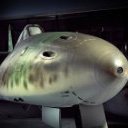
Ta-152H-0 awaiting restoration at the NASM
JayDee replied to JeroenPeters's topic in LSM 1/35 and Larger Work In Progress
Nice to finally see colour on the main model. Surely, SURELY not long to go now? What do you think your rear taste will be? -
Ta-152H-0 awaiting restoration at the NASM
JayDee replied to JeroenPeters's topic in LSM 1/35 and Larger Work In Progress
And I forgive you too. Noisy -
Nice intro, Alberto Just loving those builds.
-
Ta-152H-0 awaiting restoration at the NASM
JayDee replied to JeroenPeters's topic in LSM 1/35 and Larger Work In Progress
Loving it, and hardly any tonal crush! -
Ta-152H-0 awaiting restoration at the NASM
JayDee replied to JeroenPeters's topic in LSM 1/35 and Larger Work In Progress
Now we're rocking'! Loving that finish. -
Profimodeller Fi103 V1
JayDee replied to JeroenPeters's topic in LSM 1/35 and Larger Work In Progress
Yes!!! I'm presuming this will be built with wings? -
1:32 Norden Bombsight Robert Mrozowski Model & Design Being on a bombing run is nothing for the faint-hearted, with flak exploding around you, as well as fighters and other things designed to distract and destroy your presence. Original vector bombsight technology relied on a bomber being able to make a clean, long run towards the target, with minimal weather conditions affecting the aircraft, or indeed those defensive distractions. If you veered from the path, then your run would be inaccurate and you would need to make another run towards the target. The Americans, aware of the multitude of problems with vector sights, were working on a new system of targeting using a gimbal that would keep the bombsight pointing downwards, irrespective of weather conditions, or the pilot having to make flight adjustments. This technology lead to what became known as tachometric bomb aiming. The Norden M bombsight employed a canonical tachometric system, with the bombsight measuring the bomber’s airspeed and direction, and compensating for variations in flight path by means of an autopilot system. An analogue computer constantly calculated the bomb impact point throughout the variation in external forces that would otherwise affect it. Designed by Carl Norden, and developed in extreme secrecy, the Norden M bombsight is probably the most famous unit of its type in aviation history, being used in the B-17 Fortress, amongst many other types, and also used post-war in the Korean War, and as late as 1967, during the Vietnam War. Image courtesy of Smithsonian Institute The kit This product has been a labour of love for Robert Mrozowski. It has taken him two years to learn the software needed to design the Norden M bombsight, as well as implement the research involved into an accurate 3D model that could then become a physical model you see here. This is Robert’s very first release, and we are very pleased to be able to show it here on Large Scale Modeller. The 1/32 Norden bombsight (no ‘M’ suffix on the packet) is packed into a small clear sleeve that has a fold-over card backing for product presentation. This also includes a few images of the product, with relation to removing the stabiliser/autopilot unit from the casting block. Links are also given for websites that have Norden reference. The packet itself has a black card stiffener to further protect the products. A single casting block contains SIX parts, cast in light grey resin. These are produced by Paul Fisher of Fisher Model & Pattern, therefore the quality is assured. Another small clear sleeve is included within the packet, holding two clear punched discs for the lenses. The instructions advise using thick CA glue for assembly, with Gator Glue or similar for the clear lense parts. Of course, you could use a drop of Klear for the latter. The reference photos indicate data plates/placards in various locations. No decals are included with the set, but you can find just what you need in one of the excellent Airscale decal sets, or those from Mike Grant. Comparing the exploded views of the bombsight, along with the resin parts, they look extremely accurate to the photo reference seen on the Smithsonian website, and on Google Images. It’s obvious that Robert has spent an inordinate amount of time getting this just right. The translation to resin is also spectacular, with the parts depicting all of that detail in precise miniature form. Removal from the casting block should be easy. The block extends up to a few of the detail extremities, aiding resin pouring, and these are also easy to sever when detaching the components from the casting block. Resin production itself is perfect, with no flaws or bubbles to be seen. Conclusion Face it, if you’re building a 1/32 bomber, then a decent bombsight is really required. These are very visible on the finished model, and therefore your efforts here won’t go to waste. The bombsight in the HK Models B-17 kit is good, straight from the box, but could be improved so much more with an aftermarket part. With reference to the B-17, this particular bombsight is more suited to the B-17G at the moment. There is a different mount required for the E/F kit, but Robert says this will be released before too long, so purchase with confidence. An amazing little upgrade for a colossus of a model kit, and one you should contemplate if you are into the big bombers! Highly Recommended My thanks to Robert Mrozowski for this review sample and images.
-
Ta-152H-0 awaiting restoration at the NASM
JayDee replied to JeroenPeters's topic in LSM 1/35 and Larger Work In Progress
That's a blast from the past. Home run now? -
MiG-15!
-
What have you got?
-
1:32 Me 262 Detail sets Eduard Hot on the heels of the new 1:32 Revell Me 262B-1/U-1 Nightfighter release, comes this suit of PE sets from Eduard. Whilst these were sent to me as individually packaged products, these should be available as in Eduard’s BIG ED packet before too long, saving you a little money if you wish to utilise all items on your build. Let’s take a look at what Eduard has released for this new kit, and what it covers. #32395, Me 262B-1 exterior (Purchase link) This set comprises of a single fret of bare brass PE, packaged into Eduard’s usual slim, re-sealable wallet. Two A5 sheets are included for instructions, printed double-sided. When Eduard state that something is ‘exterior’, what they are actually mean is that it is exterior to the cockpit, so unless there are specific sets for things like engines and weapon bays etc. then you will find it on their exterior set. This particular one covers the landing gear and bays, weapons bay, engine areas and several other details that are scattered around the airframe. There is nothing in this release that is designed to majorly overhaul the Revell kit, as it simply doesn’t need it. Instead, this set helps to refine what is offered, and with generally very little surgery needed. For the engine areas, the upper removable cowls are to be fitted with interior constructional detail, and there is a pull handle for the Reidel starter in each nose cone. These housed a rudimentary petrol engine, so it was a little like pulling the starting cord on a lawn mower! For the engines, that really is it. The undercarriage and bays get a nice touch of PE, with a little port and plating detail, plus some extra detailing for the interior of some gear doors. Eduard will also release a set of resin wheels, and despite the kit parts being passable, they aren’t weighted. Some nice touches are added within the weapons bay. These include fastening plates for the gun bay doors, ejection chute and door internal detail, plus some very welcome latches to use if you position the doors in the open position. These are often forgotten about on many finished Me 262 models. A little fiddly, but well worth investing time in adding. One area that will need a little thought are the replacement of the slat actuation brackets. I’m not absolutely sure I would be totally comfortable in removing the moulded detail and fitting the PE parts. These are quite thin in relation to the plastic. Eduard has also supplied the metal plate detail that will be seen if the slat is drooped forward. A very nice touch. Other external details include end plates for the landing flaps, providing more detail here, and also for fuel filler caps that sit atop the fuselage, just forward of the canopy. Then it comes to sanding the seams, this detail is easily lost, so there’s no need to worry with these in your arsenal. Aileron, elevator and rudder trim tab actuators are also included. #32893, Me 262B-1 interior (Purchase link) Packaged as per the exterior upgrade, this set contains two PE frets; one in bare brass, and the other is nickel-plated and colour-printed. Again, instructions are printed double-sided across two sheets of A5 paper. Here we see the usual and obvious candidates in these particular sets, with a colour, mult-layer/part instrument panel and side consoles, both with extraneous lever detail etc. Some surgery will be required on the rudder pedal bar, and new pedals themselves are included. A rather nifty PE gunsight is also provided. This will be a little fiddly to execute, but it is an improvement over the kit part. A piece of clear acetate is included for the glass reflection plates. Instrumentation changes also apply to the radio transmitter and receiver units within the rear cockpit, with the main radio unit being composed entirely of PE, replacing the kit part. The pilot’s switch/fuse panel also benefits from a number of placards, as do other cockpit areas. A small number of seat modifications are also included, such as side plates that require the plastic parts to be thinned, and seat fixing brackets. Other areas addressed and corrected in this set are canopy actuation levers and fastening lugs, rear upper panel replacement, fuel filler cap detail (yes, in the rear cockpit!), and internal canopy details. Here you will find a real bonus; the night vision radar unit that is missing from the kit itself! This sits in the forward cockpit, and must surely have been a hindrance to the pilot during routine flying. One anomaly in this set is the inclusion of the data placards that fit to the electrical boxes in the weapon bay. As it wouldn’t have been economical for Eduard to have added these colour parts to the exterior set, they are included here. If you don’t want to go for the full fat interior detail, then consider the Zoom set which concentrates on the colour-printed parts only, and of course, costs a little less. That can be found HERE #32894 Me 262B-1 seatbelts steel (Purchase link) Eduard has now extended its steel belts range to cover this kit specifically. If you weren’t a fan of their original colour PE belts (and you either love or loathe them), then these might impress you more. Thankfully, these are now extremely thin and much easy to manipulate, and my limited experience of the range shows proved to me that the ink didn’t flake off. The appearance of them is also much better, with a little shading included. There is no need to construct a myriad of small parts here including belts and buckles, except for adding the padded section to the lap belts. It’s all done for you. This set also includes the attachment lugs for the Me 262 seats themselves. Supplied in a narrow sleeve, a single sheet of instructions clearly shows how these are installed to the model kit. #JX196 Me 262B-1 masks (Purchase link) I hate trying to mask something by hand, so these are always a godsend. A single sheet of kabuki paper masks includes parts for all of the canopy panels and also the wheel hubs. Due to the raised details on the hubs, these are supplied as outer circumferential parts only, which I actually prefer. Instructions are nice and clear, and you should have no problem in fitting these. Conclusion When the time comes to build this, I’ll certainly try to fit in as much of this as I can. I’m particularly impressed by the enhancements in the interior set, such as the radio equipment and the night vision unit. Some of the upgrades will require some extra care, and the one that comes to mind is the slat actuators. In all though, I think these upgrades are worth checking out. Highly recommended Thanks to Eduard for the review samples.
-
RB Productions 1:32 Me262B-1a/U-1 Updates from RB Productions
JayDee replied to JeroenPeters's topic in Aircraft Reviews
This takes it to a new level. Those antennae are superb. I'll have to invest. Already have the Eduard PE and the wheels are on their way. -
Ta-152H-0 awaiting restoration at the NASM
JayDee replied to JeroenPeters's topic in LSM 1/35 and Larger Work In Progress
I just know you'd find a reason to work on this wunderkit even longer Looking noisy -
Fw 189 for me.
-
Damn nice Danny. Very impressive finish.
-
Ta-152H-0 awaiting restoration at the NASM
JayDee replied to JeroenPeters's topic in LSM 1/35 and Larger Work In Progress
Riveting! Very nice Great flaps too. -
Awesome! I will be watching for tips. I don't have this kit, but I do have the BR86 Dampflokomotiv.
-
1:32 Dottie Mae (P-47D Thunderbolt) Limited Edition Eduard 'EduArt release' Catalogue # 11103 Available from Eduard and other good hobby retailers The P-47 Thunderbolt, designed by Russian expatriate Alexander Kartweli of Republic Aviation, and first flown in 1941 was quite an oddity among the sleek, lightweight fighters now possessed by both the Allied and Axis forces at that time. The ‘Jug’ as it became known, was the heaviest and largest single-engine fighter of its day, and with that came a price tag to match. Powered by the Pratt & Whitney R-2800 ‘Double Wasp’ engine, rated at 2000BHP, any disadvantages borne from the P-47’s physical attributes were overcome in order to make the P-47 Thunderbolt the most numerous fighter built in American history. After some initial technical difficulties and compromises, the ‘Jug’ was eventually fitted with a universal wing, allowing it to carry external fuel stores and bombs simultaneously. The high backed ‘razor’ spine of the earlier machines was also cut down to produce a fuselage allowing a bubble-canopy, giving the pilots a much better field of view. To counter resulting stability problems with the modified fuselage, a dorsal fin was added, fore of the vertical tail-plane. Carrying a powerful battery of eight Browning .50 calibre MG’s, the Jug could also carry those bombs and rockets, making it a deadly adversary late in WW2, when they roamed free, at low level, over occupied territory, destroying ground based targets. Serving with distinction both in European and Pacific theatres of war, the Thunderbolt served with the US until the late 1940’s. Other countries to use the type included the Soviet Union, United Kingdom, France, Republic of China, with the Peruvian Air Force using the type, up until its ultimate retirement from service in 1966. Whilst I haven’t built much Hasegawa over the last 10 years, there have been a couple of releases that I either missed, or had them and subsequently gave them away in a moment of weakness. One of these was the P-47D in its ‘Tarheel Hal’ incarnation, and I’ve regretted it ever since. When it leaked out that Eduard would release this as a limited edition, complete with their own resin and photo-etch, then I knew I had to take a look at this one again. I’ve long been a fan of Romain Hugault’s gorgeous aviation artwork, so for Eduard to ask him to collaborate on this release was a stroke of genius. If you’ve never seen Romain’s work before, check it out on his FaceBook page at https://www.facebook.com/romainhugault . To cap it off, a poster of the box art is supplied in the kit, carefully rolled up. The original kit was released in 2007 (08077) and has now seen four more subsequent releases (08174, 08187, 08202 and 08218 ) prior to this one. Packaged into a sumptuous, but slightly oversize box with Romain’s quite sexy Dottie Mae painting adorning the box, this kit comprises TWENTY sprues of light grey plastic, ONE clear sprue and THREE flexible sprues of polythene caps. FOUR of the smaller grey plastic sprues aren’t actually used for this release, comprising alternate props and undercarriage bay sections for the wing. A number of these sprues are fairly small and it’s common to see a number of them lined together on the same runner. A small number of other parts won’t be required for this release, with additional parts being supplied in both resin and photo-etch. Eduard purchases the sprues directly from Japan, and as a result, they are packaged all together in one single bag. I do find this a little frustrating with such a high value kit, but Eduard aren’t entirely to blame for that. The polycaps are packed into another, small packet. Thankfully, this kit exhibits no damage from being packaged this way. The outward appearance of this kit is very typical of Hasegawa releases in both style and execution, the exterior being devoid of rivets, with the exception of a small number of beautifully reproduced slotted fasteners where appropriate. Panel lines, access ports and other engraved details are of the highest standard in being crisp, even and of scale appearance. The control surfaces of this kit are moulded in situ meaning you will need to do a little surgery if you want to pose them dynamically. Their representation is very good, with them actually appearing to be separate despite the integral moulding. Rivet detail, where applicable in these areas, is recessed and very subtle. The cockpit is very well appointed, straight out of box, but this is an area of course where Eduard intervenes with their photo-etch expertise. This area is constructed as a module, complete with excellent side wall detail, suitably detailed instrument panel with raised instrument detail, rudder pedal assembly and other equipment. Of course, this doesn’t mean that things can’t be improved upon, and Eduard’s colour-printed PE parts come to the fore here, helping elevate the detail stakes further. Some kit parts are augmented further with colour PE, such as the throttle quadrant. Whilst the kit seat has no belts, Eduard has fixed this by not only the inclusion of a set of colour photo-etch belts, but also with the addition of a much more refined PE seat itself. Full colour reference is also provided for the cockpit, helping you with the painting stage. It goes without saying that there will be a certain amount of surgery needed to fit Eduard’s parts, including some destruction for things like the instrument panel. Here, all raised detail needs to be removed before the multi-layer colour PE instrument panel is fitted. This cockpit module fits into an innovative wing spar which both helps place the cockpit at the right altitude and position, and also gives the wings themselves a positive location with the correct dihedral and rigidity needed for a kit of this size. The design here is excellent. An insert fitting between the two fuselage halves is also included, complete with polycaps so that you may pug/un-plug the centre-line fuel tank. Should you wish to fit him, a pilot is also included, and this looks pretty reasonable, although it seems a shame to obscure much of the multimedia cockpit that is included. The Pratt & Whitney engine is moulded with the two rows of cylinders being separate parts. Each bank of cylinders is a single part too, with no unsightly seams needing to be exorcised around the circumference. A push rod ring and a small number of other parts complete this assembly. Eduard has included a PE ignition harness here. These are always a little tricky to fit, but when they are, brushing the PE with a little dilute white glue helps to make things look a little less flat. The supercharger fits to the engine bulkhead, and a four-piece cowl cover engine with a forward ring helping the alignment of the cowl parts. The radiator flap ring is supplied in both open and closed options. Four prop sets are included here, with two options being used for the three schemes included. The undercarriage is well presented with separate brake lines and excellent definition. No need to use the two-part, un-weighted plastic wheels either, and to remove the seams, thanks to the resin parts that come as standard in this new release. The undercarriage main bays are excellent, with crisp detail and some ancillary equipment in there. The outer, rear part of the well shape from the wing is separate, with their being two different types within the kit, despite only one of them being for this specific release. Inner undercarriage doors are also cleverly designed. These were quite chunky on the P-47, and Hasegawa have made these out of an inner and outer part so that no pin marks can be seen. Again, Eduard has included further PE detail to add to these, for further enhancement. Landing flaps can be modelled in either a raised or lowered position, with the hinges being individual parts and quite detailed and the placing of them being rigid and positive. More PE is used here for hinge plate detail, and to cover the flap ends which are moulded without any detail. Under-wing pylons are included so you may mount bombs or fuel tanks, and the latter are plugged onto these pylons by means of more polycaps. Check out the next review further down, for a Brassin alternative to the rocket launchers. External stores include an optional centreline drop tank, two wing mounted drop tanks and two bombs. All grey plastic parts are exceptionally moulded with no flash, poor seams or issues with ejector pin marks. The clear sprue holds two canopies. One of these is a single piece, closed option, while the two separate parts are for the open option. Landing and formation lights and gun-sight reflectors. Moulding is excellent with the parts being beautifully clear and well defined. Photo-etch parts Two frets are included here, with one of these being printed in colour. A number of parts here are for enhancing the cockpit, with a new seat, instrument panel, console detail, seatbelts rear canopy rail etc. whilst others are for the engine, wheel wells, and numerous small exterior details. As is typical of Eduard’s PE sets, these are beautifully made and the colour inking is very nice. Resin parts If you were expecting a wealth of resin in this release, then you might be disappointed. The only resin parts there are here are for the wheels. The main wheels have a separate outer hub, giving real depth to the inner details moulded on the main wheel. These parts, apart from replacing the crappy Hasegawa parts, are for me, a very nice addition to this kit. Tread detail is excellent, and thankfully, there is little clean-up to perform once you remove them from the casting block. Casting is also perfect, with no flaws. Masks A single, small sheet of kabuki masking is included, with parts for the canopy and the wheels. Simple, but a real time saver! As always, sharply cut. Eduard’s instruction manual is a 12 page A4 production with black and white drawings that have a little colour included to highlight where surgery is required, or where a resin/PE part is to be placed. All drawings are extremely clear and easy to follow, with good part notation and a sprue plan showing parts NOT to be used as shaded out portions. Paint codes are given for GSO Creos Aqueous paint, and Mr Color. The latter pages include full colour profiles for three schemes. These are: P-47D-28-RA, Lt. Larry A. Kuhl, 511th FS, 405th FG, 9th AF, Saint Dizier, December 1944 P-47D-26-RA, Lt. James R. Hopkins, 509th FS, 405th FG, 9th AF, Ophoven, Belgium, March 1945 P-47D-28-RA, Lt. Francis Norr, 510th FS, 405th FG, 9th AF, Saint Dizier, France, January 1945 A single sheet of decals is included for all three schemes. Printed by Cartograf, these are nice and thin, and printed in both solid and authentic colour with minimal carrier film. The decals also include a variety of stencils as well as several for the cockpit. Printing is in perfect register. Conclusion For Eduard, this was an inspired choice of collaborative release. In 1:32, this is simply the best, most accurate and P-47D kit that money can buy, and if you’ve never had the pleasure of seeing a Thunderbolt kit, then the size of this beast will surprise you. All of the Hasegawa P-47D releases are excellent, and Eduard’s new incarnation is no exception. Three great colour scheme on a fantastic kit, some lovely resin and PE parts and a Romain Hugault poster to adorn the man cave wall. Get this one whilst you can. I believe they are selling like the proverbial hot cakes at the moment! Highly recommended. My sincere thanks to Eduard for the review kit seen here. To buy this directly from Eduard, click THIS link.
- 6 replies
-
- 4
-

-
- P-47
- Thunderbolt
- (and 1 more)
-
Hi all, My car-door Typhoon is now finished. As much as this kit can punish the senses, I really do like it very much. Watch out for it in the next reprint of the 'How to Build...' book from Doolittle Media:
-
Grey Matter 1:32 F4U-1A Corsair Engine Bay (for Tamiya kit)
JayDee replied to JayDee's topic in Aircraft Reviews
Unfortunately, the old photobucket account was killed before I could save the images I needed. -
Ta-152H-0 awaiting restoration at the NASM
JayDee replied to JeroenPeters's topic in LSM 1/35 and Larger Work In Progress
Bone idle that is!!! -
Airfix Hawker Typhoon Mk.1b early (Car Door)
JayDee replied to JayDee's topic in LSM 1/35 and Larger Work In Progress
Update, anyone? I've been busy juggling a few builds recently, so apologies for weeks that have passed here. This model is building up quite quickly now, but you really have to make sure that you are precise with all construction, as the tolerances are high and the part count also high. To set the spars onto the lower wing, clamps were used with sanding sticks to aid placement. Cocktail sticks are used to push the spars hard against the edge of their location. Most of the plastic parts in the gun bays were ditched in favour of Eduard's resin guns/ammo and photo-etch bins. I have to say that this really adds to proceedings when compared to the kit parts, with no ugly, ill-places seams to fix. This is a LARGE model, and it shows at this stage. It's hard not to keep knocking the crap out of this as you start to manipulate it. More soon. -
Thunder Model ThunderModel 1:35 US Army Tractor Case VAI
JayDee replied to JeroenPeters's topic in Armour/AFV Reviews
Most definitely Mirror Models/LZ - related. Lovely kit and nice review. Hope you build this one soon. -
What a great show. Pity I missed it.
-
You guys did a great job! Superb setup and attractive banners. It'll be hard to trump for 2017 (no pun!), but we'll be even better and stronger.