
JayDee
-
Posts
3,265 -
Joined
-
Last visited
Content Type
Profiles
Forums
Events
Gallery
Everything posted by JayDee
-
I don't think this will fit in the cockpit .....and I blame YOU!! I never knew about these until you told me, and I've been skint since!
-
Thanks for the link. Can't wait to see this
-
1:32 Vought OS2U ‘Kingfisher’ Kitty Hawk Catalogue # KH32016 The Vought OS2U Kingfisher was an observation floatplane that first flew in 1938. It was designed to be catapult-launched, but could also operate using fixed or wheeled landing gear, and was generally considered to be underpowered despite it being the primary shipboard observation aircraft of the USN. Power was supplied by a single 450hp Pratt & Whitney R-985-AN-2 radial engine. Designed by Rec Beisel, the Kingfisher was the first ever aircraft to be assembled using the new spot-welding technique that was designed to reduce airframe drag due to the resultant smooth surface. The airframe was designed with a number of unique and unusual lift creating features such as spoilers and drooped ailerons, assisting the relatively slow take off speed of this type of aircraft. Defensive armament was provided by the installation of two .30 calibre machine guns. One of these was installed on a flexible mount in the rear cockpit, and the other was fixed and forward firing. Bombs and depth charges could also be carried underneath the wings. The type gradually began to be phased out towards the end of WW2, with them last seeing service in Cuba in 1959. When production stopped, over 1500 of all variants had been built. Kitty Hawk’s new release is packed into the same size box as the P-39 and F-86K releases, with a super glossy lid with an artwork depicting a Kingfisher on a catapult, with some serious warfare going on around it…Japanese fighters attacking the carrier, and plumes of smoke with reddened skies. I quite like the style of art that Kitty use on their boxes. I’m a recent newcomer to the brand, with me owning the P-39, and recently reviewing the F-86K. The box art is bold, attractive and engaging. There are a whopping SIX schemes from which to choose, with one of these being a machine without floats. As this is still shown as assigned to a battleship, I’d sure like to see photos of this one fitted with a standard undercarriage. Anyway, I digress. There are FIVE light grey sprues in this kit, each packaged separately in a clear bag. A very nice touch is the cardboard box that protects the clear sprue from any damage. In the bottom of the box lies a large decal sheet with a second, smaller supplementary sheet, plus a small PE fret and the instruction manual. SPRUE A If there was ever any question of this aircraft’s role, then seeing the huge main float here will immediately put you right. This is split into traditional halves, with the bracing struts integrally moulded to the flat attachment. Be real careful here as the sprue connects to this fragile detail. I would use a razor saw and immediately sever that connection to prevent possible damage from the sprue flexing. Surface detail is very restrained with finely engraved panel lines and also riveting. Riveting, I hear you say? Well, I’m not too sure if these represent rivets or small indents that can result from high current spot welding. I don’t know in honesty, but I do know that Kitty have created a nicely subtle surface rendition. This level of finesse extends to the two outrigger floats which provide some stability on take-off/landing. Notice two sets of wheels on this sprue? One of these is for the standard undercarriage and the others are to be fitted to the centreline float for ground taxiing. These are fitted to two frames that clip to the float, and they also have what appears to be brakelines. Wheel detail looks quite basic, but I think this is through necessity. Each set is also weighted. Aiding alignment of the standard undercarriage, the axle hole has a flat side. After all, it’s embarrassing to have a flat on top of the wheel! Been there, done that and brought out the razor saw to fix. Other parts on this sprue are the various float struts, fixed undercarriage legs, boarding ladder, oleo struts, bombs, carriers and sway braces. SPRUE B This sprue concerns itself solely with the wings and their separate control surfaces. There are only a few rivet lines here, running along the outer edge of what appears to be a main single upper wing skin, plus some on the inboard wing area, presumably where the internals required a stronger mechanical connection where they meet the fuselage. Definition is very good, and they are fine enough to hold a wash maybe, but without looking like divots. Leading edge plating is also riveted, but the rear of the wing panels is ribbed to represent the fabric here. No sagging at all, and the ribs dive away towards each end. The same representation extends to the ailerons and landing flaps that are moulded as upper and lower parts. Other wing surface detail includes recessed and open locations for the wing top lights, and other various places for a multitude of other clear parts. I have to say that the rear wing edge has some beautifully fine rib detail where they force up into the fabric covering. Also of note is that the wings don’t have any tabs to connect them to the fuselage. Kitty has moulded these as separate parts that fit within the wing halves and protrude. My only thinking here is that the slightly angled wing root area didn’t easily allow for this to be integrally moulded. Still, it looks a perfectly workable solution. Depending on if you’ll fit bombs, or the floats for the sea version, you will need to open up the correct holes from the outset. The instructions don’t make this very clear, so be prepared. SPRUE C The last control surfaces are moulded here, including the separate rudder. All are traditional upper and lower parts, with the same rib detail as we saw on the ailerons and landing flaps. Elevator trim tabs are moulded in situ with their actuators. Stabiliser detail is commensurate with that seen on the wings and main float, with finely engraved panel lines and subtle riveting. With my limited experience of Kitty Hawk kits, I have to say that I very much like how they depict their panel lines, access ports and riveting. For me, beautifully balanced and attractive in execution. Another large part is the rear internal decking for the gunner/observer position. A small number of ejection pin stubs exist on the lower side, but will still of course need removal and clean up. This is a pretty busy sprue, and despite there only being five grey sprues included in this kit, don’t think that you’ll be sold short on parts count. Whilst I don’t have an overall figure, (and NO I’m not going to count them!), a couple of sprues in this kit are absolutely chock full of parts with almost every conceivable space containing a multitude of parts. You can pretty much say that his sprue is the main detail sprue, but its not alone in high parts count. On this sprue, you will find instrumentation, avionics, instrument panel coaming, avionics carriage/tray support, levers, as well as a host of parts that go into the assembly of the rear gunner seat. This in itself is a mini project, and this is supported with some rather nice photo etch. The gun itself is also moulded here as a multipart item. I would have thought this would’ve looked a little bigger, but it does look proportioned, and I will put this down to my lack of knowledge on the subject. Note that Kitty has also included the tail wheel and fork here. A section of exhaust is also to be seen, with both ends of the tube having a separate part to aid the hollow representation required on these broad orifices. SPRUE D Aha! The fuselage halves are now up for a visual. As the kit is designed with a full engine, the fuselage is moulded sans cowls. Also the rudder is moulded separately, as we saw on a previous sprue. Now, along with the subtle panel lines we are now used to, and rivet lines that only accompany the panel joint areas, the void in between them is just that….a void. Kitty have correctly shown that this aircraft was spot welded, by simply leaving these panels bare. It’ll feel off not having to go to town and start my own riveting on this one, but that’s nature. Check out those wing root areas with the raised plate and neat rivets around the circumference. One thing I note on my sample is that the underside of the fuse has a mould seam that actually has a slight raised edge. No biggie as it can be removed with a sanding stick in under a minute. Internally, the fuselage is resplendent with detail, including former detail and numerous locations for the internals to either connect or slot. There are a number of elector pin marks in here, but quick inspection shows that they are deep in the fuse, and/or hidden by extra details. Not all, but most. A small number will need a little attention. Certainly nothing to worry about. Note that if you do plan to do the wheeled version, you will need to cut away the plastic that webs over the tail wheel bay. On these main parts, the sprue gate connector is moulded to the joining face, and not on the surface. I prefer this approach as I fid it easier to level the joint edge than to shape the external plastic with a sanding stick. Depending on which version you’ll build, there are some holes that will want uncovering too. Look around here and you’ll find several bulkheads and frames too, with any pin marks carefully relegated to the invisible faces of these. Detail is sharp and locating holes are well-defined. More internal parts too, such as foot boards, instrument panel (with blank instrument faces), consoles, avionics, throttle quadrant, stowage lockers etc. I also see a run of what look like incendiary bombs, but can’t see them on the instructions at this point. SPRUE E The last grey sprue, and apart from the readily recognisable engine parts, this one is a mixed bag of components from various areas of the airframe. Firstly though, that engine. This is actually the first thing up for construction and contains almost 30 parts. The single radial bank is moulded as front and rear halves and is then supplemented by a whole array of parts to both front and rear of this, making up a fully detailed engine that can be displayed without any cowls. Even the prop and hub is broken down into a further eight parts and the hub detail alone makes it worth the engineering investment worthwhile. The whole kit looks like a builder’s building project, through and through. I know it can be a put off for some, but as long as the engineering is sensible, I really don’t mind a high parts count. Engine detail is excellent with refined cooling fin detail etc. Cowl parts are to be found here too, although there is no moulded detail on the interior of them, so be careful how you pose them if you want to show them removed. Radiator flaps are moulded in the open position. Note that the pilot seat is moulded here, as are a number of internal ancillary parts including the oil tank. Yet more internal parts for the crew area too, such as the framework for the gunner’s station. SPRUE GP A whopping TWENTY parts are moulded here on a sprue that has a very good level of clarity. A little distortion can be seen through the upper windshield panel, but this shouldn’t be too noticeable when everything is in situ. There are a few very low level abrasions evident too, but these will disappear under a polishing stick or some Klear. Frame lines are nicely defined and should be easy to mask up against. The canopy is a five-part affair and the remaining 15 parts are the numerous lights that fit the wing and fuse spine. Plastic Summary Moulding quality is very high, with no flaws (except for the fuse mould seam line) to be seen. There are a number of raised ejection pin ‘towers’ that will need snipping off, especially on the engine sprue. I can’t see evidence of sink marks, short shots or any other issue with my sample. Seam lines are very slight, and flash is a rare sight. Photo Etch One small fret is included that contains parts for the pilot seatbelt (straps and separate buckles), gunner lap belt, flexible gun mount, cockpit levers etc. There are almost 50 parts on this small fret, and all superbly etched, with tiny connecting points that will be dead easy to cut through. Decals The largest sheet here contains not only the main national markings, serials and codes for the various machines. There isn’t really anything in the way of stencils, but there are numerous coloured bands and walkway lines. I can’t vouch for the red colours on the various main markings. The Russian red stars look a little bright and the red portions of the roundels look the same. They are the same tone as the bars on the tail fin of the US machine, so may have been used to cut print costs. I don’t know. The red looks little ‘orangey’ to me too. A smaller sheet contains some emblem decals and also decals for the instrument panels and consoles. I would perhaps prefer to use individual Airscale decals instead of the one-piece instrument panel pieces, but your mileage may vary. Printing quality is actually very good as the decals are nice and thin, and have minimal carrier film. Everything looks in register too. The SIX schemes in this release are: OS2U-3, Naval Air Station Corpus, 1942 OS2U, VO-1 aboard USS Arizona (BB39), 1941 OS2U, VO-1 aboard USS Pennsylvania (BB38), 1940 OS2U-3, Soviet Union, based on ex-Italian light cruiser Milwaukee, 1944 OS2U-3, US Navy, 1941 OS2U, FN768, served in No.765 Sqn, Royal Navy, Sandbanks, 1943 Instructions I quite like this attractive style of booklet with its glossy cover and full colour, glossy colour scheme fold-out sheets. Sequence illustration is in black and white line drawing format. Some colour reference is supplied during construction and appear to be in GSI Creos/Mr Hobby format. Nothing here should be difficult to follow. Conclusion After seeing the P-39 and F-86K, I really am becoming a fan of Kitty Hawk model kits, and this release only reinforces my initial thoughts. I have still yet to build and complete a KH kit, but I have taped together the F-86K and tested overall fit with no problem, and as you can see from my taped images here, this seems to be a trouble free pursuit also. Detail levels are exactly what I’m looking for personally, and I imagine that there is enough included out of box to satisfy the majority of modellers. No doubt there will be a suite of aftermarket available for this pretty soon, but whatever is released, it will only serve to make an already superb kit, a really outstanding one. I also have to give some serious kudos to Kitty Hawk for being bold enough to release this particular kit in this scale. VERY highly recommended My sincere thanks to Kitty Hawk Models for this review sample. Check your local hobby shop or favourite online retailer for best price.
-
That came together quick. Is everything glued or some assemblies dry-fit, for painting?
-
Setting the standard for future builds. A real reference point for my build
-
Anyone using an ultrasonic cleaner for their airbrush?
JayDee replied to Mikester's topic in Modelling Discussion
Do it..... -
Anyone using an ultrasonic cleaner for their airbrush?
JayDee replied to Mikester's topic in Modelling Discussion
I use one. Warm water with a drop of detergent. Leave for 5 mins and all the shit comes out of it. -
Now this will be interesting That Lanc served us well
-
....started it yet then?
-
AERO Line Plusmodel AERO Line Plusmodel 1/48 BAC Lightning pilot
JayDee replied to One-Oh-Four's topic in Non-LSM Reviews
What a great looking figure! Looks to be larger than 1:48 too. Very detailed. -
-
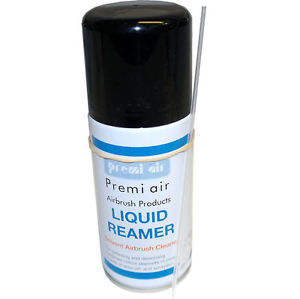
I use Premi-Air Liquid Reamer to clean my airbrush. That stuff will remove anything including potential nuclear waste. It eats Mr Paint for breakfast.
-
Mr Paint, Various Colours Uschi van der Rosten Catalogue # See article for references and price Available from Uschi van der Rosten Modellers, like me, can tend to be very much stuck in their ways when it comes to the staples of their hobby. Since I came back to the hobby about 7 years ago, and I found out that Humbrol had changed formulation, I was coaxed into using Gunze paints, which, along with Tamiya, I have been using ever since. The stuff sprays like silk and the coverage is superb. I have tried other brands, such as Lifecolor, and I really haven't got on with them very well. In fact, it really solidified my resolution to continue using what I had grown accustomed to, and I rarely venture from it nowadays. A good friend of mine, Alex Glass, from Uschi van der Rosten, tempted me to try something different, however. I always get a bit of a feeling in the pit of my stomach when I come to test new paints, so how would I far with this new brand? The paints which I have been sent are: MRP-3, Super Silver Metallic, €6.30 MRP-4, Basic White, €5.90 MRP-5, Basic Black, €5.90 MRP-31, Chrome, €6.30 MRP-50, RLM02 Grau, €5.90 MRP-51, RLM04 Gelb, €5.90 MRP-52, RLM23 Rot, €5.90 MRP-58, RLM65 Hellblau, €5.90 MRP-60, RLM70 Schwarzgrün, €5.90 MRP-61, RLM71 Dunkelgrün, €5.90 MRP-64, RLM74 Graugrün, €5.90 MRP-65, RLM75 Grauviolett, €5.90 MRP-66, RLM76 Lichtblau, €5.90 It's highly likely that you've never heard of Mr Paint. Please don't confuse this name with the Japanese Mr Hobby range (Gunze/GSI Creos) of paints. The name similarity is where things pretty much stop. Mr Paint are a new name, and hail from Slokaia, and they are distributed by Uschi can der Rosten, who currently carry the full range of these paints. This is also a range which is still currently expanding, and not only carrying many staple colours for German armour (RAL) and aircraft (RLM), but also paints formulated for Russian military vehicles, as well as modern FS Standard colours, Ukrainian Air Force and modern Russian colours. To cap it all, a range of basic colours are available, a well as a number of metallics. Again, the range here is expanding still. All paints are bottled in the same 30ml style bottles that Alclad use, and also have a ball agitator inside them to help you mix the pigment into the carrier solution. I've heard all sorts of stories about 'exploding bottles' with regards to Alclad, but never had any issue with the ball agitators. During my tests with Mr Paint, I also never experienced any issue. Here is where I must mention a first important quality of these paints. They DO need quite a lot of shaking to mix the pigment from the settled sediment that you will see when you first get these, and of course will occur when you come to subsequently use them. The settled pigment is very, very fine, and it can take a few moments before the agitator ball gets going. Stay with it. It's very important you get everything into the carrier solution. So fine is the pigment, that Uschi describes these paints as 'Superfine Inks'. Like Alclad, Mr Paint is not intended to be thinned before application. Don't forget though, these are 30ml bottles, in contrast to the Gunze 10ml bottles which need to be thinned by at least a 1:1 ratio. The carrier solution in Mr Paint is quite thin, and therefore doesn't need further thinning. How does this stuff actually cover though? I have tried Vallejo Air in the past, and absolutely hated it. It clogged up the airbrush and was extremely problematic. My faithful Gunze and Tamiya are flawless in application. Having passed every one of these new colours through my Iwata HP-CH, I can tell you that they also perform flawlessly. Like my trusty Gunze, they spray like liquid silk, with excellent coverage ability. From my previous project, my compressor was set at 11 to 12PSI, and that's the pressure I used for spraying these. I do suggest that you use a facemask and/or spray booth when applying these, as, like Alclad, they are quite noxious in the fume department; certainly more so than Gunze, and most definitely more than Tamiya. Drying time is an important factor too, and here it is similar to Gunze paints, with everything being touch dry within a minute or so of application. Of course, you would want to leave your work a good 30 minutes before you contemplate handling it, and longer before you apply any Klear or masking tape. I usually leave Gunze for a good number of hours before I consider working my scheme further. Upon application, I can tell you that these paints do dry with a sheen to them which should be more than sufficient when it comes to adding a pin wash to your parts. Being acrylic, an enamel wash shouldn't affect this in any way, but I would seal with Klear/Future before applying any extensive weathering. Having Gunze equivalents for more or less all the colours than Uschi had sent me, I decided to create a colour swatch for each of the paints I'd been sent. This is a great way to see how the shades stack up against something I was more familiar with. I was mostly very pleased with the overall results, and perhaps a little more ambivalent with others. Let's look at these in groups of two colours at a time. Super Silver Metallic and Chrome I have to say that I can't actually tell much of a difference between these two at first glance, but angling the colour swatches slightly does indicate a very subtle tonal change between them. Uschi's site talks of applying these over a gloss black base coat, and for the purpose of this test, I have airbrushed each colour with and without a black base. Again, without the black base, I can't see much of a difference between this and the swatch applied over black. In both cases, the metallic colour is both solid and vibrant, and also sprayed very easily. In fact, easier than Gunze Metallics and most certainly easier than Alclad, despite the fact that I find Alclad quite an easy medium to apply. RLM70 & RLM71 Out of the two of these colours, RLM70 has the most marked difference in shade when compared to the Gunze equivalent. As this is mostly used for green splinter camouflage, this will be quite noticeable when covering a large expanse. None of these comparisons are going to give you a definitive summary of what is and isn't correct. Actual paint shades varied in real life, and apparently more so as the war was becoming a lost cause for Germany. The Mr Paint RLM 70 is most certainly a lot lighter than the Gunze equivalent. For you, the modeller, it could all be down to a matter of personal taste. I personally think the lighter Mr Paint will look better on a splinter scheme when applied alongside RLM71. With RLM71, there is a difference in shades between both manufacturers, but it is less marked. Whilst discernible to the naked eye when placed side by side, over a large area, I don't think you'd actually be able to tell any difference unless it was pointed out against a swatch. RLM74 & RLM75 Here we have another combination that is most commonly seen together on the same two-colour 'grey' camouflage . Both paint shades are markedly different to the Gunze equivalent, but I have noticed that there is far more contrast between the Gunze shades than between the Mr Paint shades. In short, using Mr Paint will give you a camouflage in which the overall tonal difference is certainly much less than with Gunze. Again, I can't say whose paint is more accurate in hue and tone. I'm sure most modellers won't have that information available, and even museum re-builds have to be looked at with some suspicion. RLM02 & RLM23 Two fairly random, general colours to look at now. RLM02 is of course used as both an internal colour, but also as an exterior camouflage colour in its own right, as well as in conjunction with others. Again, we have a marked contrast between the Mr Paint and Gunze. Mr Paint is actually FAR darker than Gunze. While this may look great on an exterior, I can't say how it will look in a small cockpit which is already quite a dark, cramped area. Some careful highlighting and lowlighting would perhaps need to be employed. Mr Paint's shade does look very good indeed, but as I say, much darker than what I am used to. RLM23 isn't a much seen or used colour. The JV44 Fw 190D machines had this in stripes on their under-surfaces, and Wolfgang Späte had his Komet painted in this colour. Those are probably the most extreme uses of RLM23 Red. This is another colour which varies greatly from Gunze. Both shades aren't strictly a hard red colour, with the Gunze colour lying more on the natural-red side of the spectrum. The Mr Paint colour has more of an orange tint to it, that I admit isn't very convincing to my eye. It's almost as if looking at it through a badly colour-calibrated monitor. I don't know if this would look better in general use, as the Gunze colour has a slight pinkish hue to it that the Mr Paint one doesn't have. This is one I'll need to try out in anger. RLM65 and RLM76 It almost goes without saying now that both of these colours are again different to the shades I am used to using. RLM65 is actually far 'bluer' than the Gunze paint, and actually more attractive as a shade. It's also generally lighter than Gunze, but still retaining a rich hue. Mr Paint's RLM76 is FAR lighter than the Gunze equivalent, and appears to have more of a greener appearance than the greyer look of the Gunze. Just for comparison, there is far more of a contrast between both Mr Paint shades here than between the Gunze type. In use I recently tested Mr Paint in anger on my 1:48 Eduard Bf 109G-6, by airbrushing the fuselage tail band and rudder. You can see the results for yourself with this image. Conclusion Paint is always difficult to review as we all use it differently, but for me, I can say that this one sprays beautifully, and very akin to Gunze. This brand also has a superb range of colours which is expanding almost weekly, so for me, fulfils most of my spraying requirements. Despite the colour variations between these and my usual brand, and admittedly, I didn't have a third brand to compare against, the colours are still highly attractive and look very authentic. My only real reservation is for RLM23, which has a distinctive orange hue and I feel will look strange in most applications, but I will give it a try. This is certainly a brand to look out for, and I feel that we'll be seeing this more often in future. My next Luftwaffe project will be HK Models' 1:32 Dornier Do 335, and I'll use Mr Paint with this exclusively. I'm really looking forward to that! Check out this video from Doogs Models, showing application: Highly recommended My sincere thanks to Uschi van der Rosten for these review samples. To purchase directly, click THIS link.
-
Ju-88C-2 "4D+FH" in pieces
JayDee replied to JeroenPeters's topic in LSM 1/35 and Larger Work In Progress
I'd better send you those decals with the Profi review stuff, and some stuff for Erik too -
That's a cool kit. Those track numbers are odd looking. Build soon?
-
HPH Models Kugisho Ohka Model 11
JayDee replied to JeroenPeters's topic in LSM 1/32 and Larger Aircraft Ready for Inspection
Perfect. I'd be damn proud of that. Maybe you should finish mine. -
Try unplugging your router for 30 mins. be assigned a new IP. That's sometimes worked for me. Failing that, you might need to flush......DNS flush. Easy to do: http://www.noip.com/support/knowledgebase/how-do-i-flush-my-windows-dns-cache/
-
Jeroen said he's doing this one:
-
I shit you not, as and when I build this baby, I will do THIS scheme!
-
Nice to see one in non-luft colours. You on a French trip at the moment?
-
1/32 HPH Models Ohka Model 11
JayDee replied to JeroenPeters's topic in LSM 1/35 and Larger Work In Progress
S E X Y ! ! What artefact you going to display with it? -
G.10!
-
Tamiya 1:32 P-51D Mustang 'Passion Wagon'
JayDee replied to Mish's topic in LSM 1/32 and Larger Aircraft Ready for Inspection
That's still a damn nice result. Such a great kit, and I prefer the Olive drab finish to the NMF too -
As long as it's not fatally flawed eh?
-
Well, imagine that!